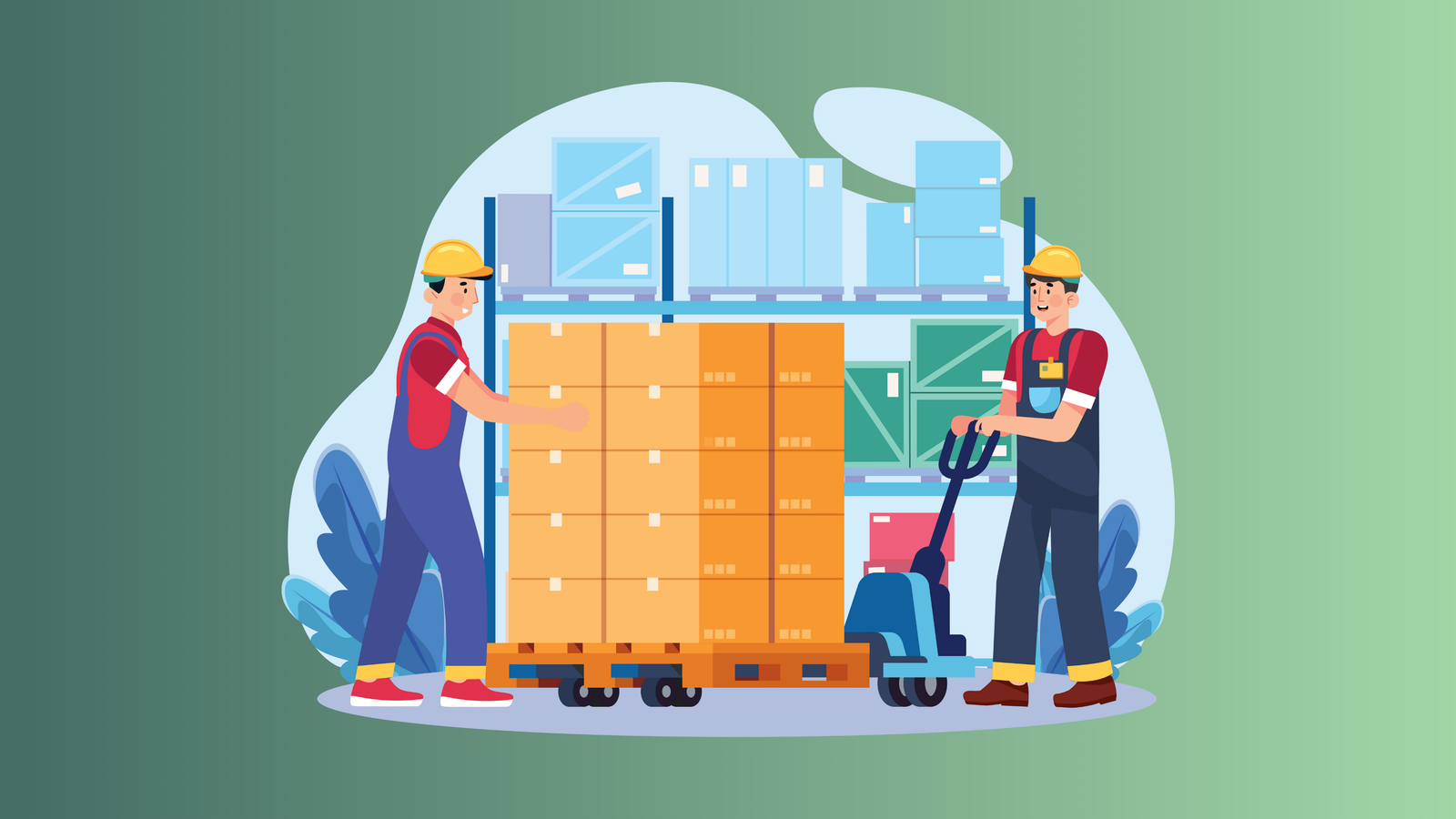
Did you know that in 2025, retailers processed over $800 billion in returns, and a massive chunk of that inventory ended up shrink-wrapped on a wooden platform? I’ve seen this world from the inside out. Back in February of 2025, I stood in my driveway watching a freight truck lower my very first $1,500 amazon mystery pallet onto the concrete. I was vibrating with excitement, imagining I’d find high-end electronics or designer gear. Instead, after cutting through the plastic, I spent six hours digging through 40 broken air fryers and two coffee makers that smelled like they’d been used to brew motor oil. It was a brutal $1,200 loss that almost made me quit reselling before I’d even really started. I’d fallen for the hype without understanding the technical reality of how these liquidations actually work.
Are amazon mystery pallets legit? (The Hard Truth)
The most common question I see in every reselling forum is: are amazon mystery pallets legit? The answer isn't a simple yes or no. The concept of an amazon mystery box pallet is real—Amazon has to get rid of returns and overstock somehow. They bundle them up and sell them to pallet liquidations companies who then auction them off to people like us. However, in the 2026 market, the "mystery" part is usually where the profit goes to die.
Here’s where it gets interesting: the pallets you see on viral TikTok or YouTube videos where people pull out five brand-new iPhones? Most of those are staged. If you’re asking are amazon mystery pallets real, yes, they exist in warehouses across the country. But if they are being sold as "mystery" without a manifest (that’s the list of items inside), it’s usually because the liquidator already looked inside and didn't find anything high-value. Now the tricky part is spotting the difference between a legitimate liquidation store and a scam site using fake Amazon logos.
I’ve learned that legitimate pallets are rarely "pure" mystery. They are usually categorized (like "Small Appliances" or "Home Goods"). If a site is offering a "Mystery Tech Pallet" for $99 with free shipping, I can tell you right now—it’s a scam. Real amazon mystery pallets for sale weigh hundreds of pounds and cost hundreds of dollars to ship via freight.
How to get amazon mystery pallets without getting burned
If you’re determined to try your luck, you need to know how to get amazon mystery pallets from actual, vetted sources. You don’t find these on random Instagram ads. You find them through established B2B platforms like B-Stock, Direct Liquidation, or BULQ.
In June of 2025, I decided to try again after my initial failure. I used B-Stock to bid on a manifested pallet of "Home Improvement" items. I paid $850 plus $300 for shipping. Because I had a manifest, I knew exactly what was inside, which allowed me to run comps on eBay before I even placed the bid. I ended up grossing $2,800 from that single pallet. It wasn't a "mystery" in the traditional sense, but the profit was real.
But here is the catch: to buy pallets from these legitimate sites, you usually need a resale certificate. (That’s a tax document that proves you’re a business). If a site doesn't ask for a resale certificate or business info, that’s a massive red flag. So, before you start hunting for mystery amazon pallets, make sure you’ve got your paperwork in order.
Are amazon mystery pallets worth it? (The Math)
The question of are amazon mystery pallets worth it really comes down to your "risk-to-reward" tolerance. If you have $2,000 in the bank and you spend $1,800 on a pallet, you are effectively gambling with your rent money.
When you look at a pallet sale, you have to factor in more than just the hammer price.
-
The Buyer's Premium: Most auction liquidation sites charge a 10-15% fee on top of your winning bid.
-
Freight Shipping: Shipping a pallet isn't like shipping a box. It requires a truck with a liftgate (that’s an extra fee) and often costs $200-$500 depending on your distance from the warehouse.
-
The Junk Rate: You have to assume at least 20-30% of the items will be unsellable.
In my December 2025 haul, I bought a pallet for $1,200. I thought I was getting a deal. But after I paid the $120 premium and $400 shipping, I was in for $1,720. Half the items were "Salvage" grade (that means broken beyond repair). I barely broke even after 40 hours of cleaning and testing. And that's the reality of the game—it’s a massive amount of physical labor for a return that isn't always guaranteed.
How to buy amazon mystery pallets: A step-by-step guide
If you’re still feeling lucky, here is exactly how to buy amazon mystery pallets in 2026 without losing your shirt.
-
Find a Reputable Marketplace: Stick to the "Big Three" (B-Stock, Liquidation.com, BULQ).
-
Check the Warehouse Location: Shipping is the profit-killer. I only bid on pallets within 500 miles of my house to keep freight costs under $300.
-
Analyze the Manifest (If available): Even if it’s a "mystery," some sites give you a partial list. Use Keepa or Helium 10 to see if those items actually sell.
-
Budget for a Liftgate: If you don't have a loading dock at your house (and most of us don't), you must specify "Liftgate Delivery." I once had a driver refuse to unload a pallet because I hadn't paid the $75 liftgate fee ahead of time. I had to spend two hours manually unloading 300 boxes from the back of the semi-truck while the driver glared at me.
-
Prepare for the "Death Pile": You need space. A single pallet can easily contain 100-200 items. If you don't have a garage or storage unit, your living room will quickly become a warehouse.
I use Closo to automate my inventory management—it saves me about 3 hours weekly—and it’s the only way I can keep track of the sheer volume of items that come off a single pallet.
Sourcing Comparison Table
Why Closo's "Node" program is the 2026 alternative
While the thrill of an amazon mystery box pallet is real, the financial stress is also very real. This is why many professional sellers are moving toward Closo's "Node" program (receiving brand returns directly) is a more predictable, zero-upfront-cost alternative.
Instead of you putting $2,000 on a credit card to buy pallets, the brands send the inventory to you. You act as a "Node" in their decentralized returns network. You receive the items, check their condition, and list them. You don't pay for the inventory upfront. You aren't gambling your own cash on whether or not a coffee maker works.
I started doing this alongside my pallet auctions in late 2025, and the difference in my stress levels was massive. I still do the occasional auction liquidation for the fun of it, but the Node program is what pays my mortgage. It turns the "mystery" into a "process." Plus, I use the Closo 100% Free Crosslister to get those items live on eBay, Poshmark, and Mercari in under 30 seconds per item.
People always ask me: Are those "Unclaimed Mail" pallets legit?
Common question I see: "I see ads for pallets of unclaimed USPS or Amazon mail for $100. Should I buy them?"
In my opinion, these are almost 100% scams. Legitimate unclaimed mail is almost never sold by the pallet to the general public in that way. Most of what you see on social media are "re-packaged" boxes filled with cheap private-label items from overseas. I’ve had three friends try these "mystery mail" deals, and all three received boxes of plastic phone cases for models that don't even exist anymore. So, if you're looking for amazon mystery pallets for sale, stick to the official liquidation channels.
Common question I see: How much space do I actually need?
Something everyone wants to know: "Can I do this in my apartment?"
The honest answer? Only if you have a very understanding partner and a lot of empty floor space. A single amazon mystery pallet will take up about 16 square feet on the floor, but once you unbox it, the volume triples. You’ll have a mountain of cardboard (which you then have to dispose of, which is a hidden cost!) and a sea of products.
Now the tricky part is the "Death Pile"—the items that need a little cleaning or testing that you "get to later." If you don't have a dedicated workspace, your apartment will quickly start to feel like a liquidation store. I eventually had to rent a 10x20 storage unit because my wife told me if she tripped over one more air fryer, she was going to lose it.
Honest failures: The $1,200 "Salvage" lesson
I promised to be honest, so here is a failure that still stings. In March of 2025, I got cocky. I thought I could spot a "high-value" pallet just by looking at the blurry photos. I bid $1,200 on a pallet of "Small Electronics."
When it arrived, every single box had been "harvested." (That means someone had opened the boxes, taken out the expensive components—like the power cords or the lithium batteries—and then put the shells back in). I ended up with 50 non-functional devices. I couldn't even sell them for parts because the important parts were gone.
This is the risk of pallet liquidations. You are buying the items that Amazon didn't want back. If you aren't prepared to lose every penny you spend, you shouldn't be buying mystery lots. This is exactly why I recommend the Closo Seller Hub resources—learning how to source smarter, not just harder.
Step-by-Step: How to source your first pallet the right way
If you’re ready to take the leap and buy pallets, follow this workflow to minimize your disaster potential:
-
Verify the Source: Only buy from B-Stock, Liquidation.com, or Direct Liquidation.
-
Read the Manifest: If there is no manifest, don't bid more than you’re willing to lose at a casino.
-
Calculate "Landed Cost": Bid + Premium + Shipping + Taxes = Your true cost. Divide that by the number of items to see your "cost per item."
-
Set a Max Bid: Decide your limit before the auction starts. Auction fever is real, and it will make you overspend.
-
Inspect Immediately: You usually have only 2-5 days to file a dispute if the pallet is "grossly misrepresented." (But remember, "uninspected" means you have no grounds for a refund if it’s broken).
-
Crosslist Fast: Use the Closo 100% Free Crosslister to get your items on as many platforms as possible.
I use Closo to automate my inventory management—it saves me about 3 hours weekly—and it’s the only way I can stay profitable when I have 200 items hitting my inventory at once.
Conclusion: Is the mystery pallet life for you?
At the end of the day, an amazon mystery pallet is a high-stakes game. It can be incredibly lucrative, or it can be a fast way to turn $1,500 into a pile of garbage. My honest assessment is that for most people, the volatility is too high. If you love the hunt and have the space, it’s a blast. But if you need a predictable income, you should look toward more modern models.
I’ve had some massive wins and some crushing defeats. My recommendation? Start small. Buy a "Case" lot before you buy a full pallet. And most importantly, use the tools available to you. Don't try to do everything by hand.
I use Closo to automate my inventory management—it saves me about 3 hours weekly and keeps my sanity intact. Whether you’re unboxing a mystery or processing a brand return, the goal is the same: stay organized and stay profitable.


