Back in 2024, during the peak of the BFCM rush, I found myself pacing the floor of a fulfillment center that felt more like a pressure cooker. We were grappling with a 5.3x return spike that had effectively paralyzed our outbound shipping lanes. But the real headache wasn't just the physical volume; it was the capital tied up in duty payments for inventory that was sitting, unsold, in our "overflow" area. We were bleeding cash on import taxes for products that might eventually be returned or redirected to international markets. It was a classic warehouse bottleneck that turned into a financial crisis. If we had moved that inventory into a bonded warehouse earlier, we could have deferred those payments and kept our cash flow liquid during the most expensive quarter of the year. For a high-growth DTC brand, the difference between "in stock" and "in the black" often comes down to how you manage these tax-advantaged spaces.
Bonded Warehouse Meaning: More Than Just a Storage Unit
Before we get into the tactical grit, we need to clarify the bonded warehouse meaning for the modern e-commerce operator. In the world of global trade, a bond is essentially a financial guarantee.
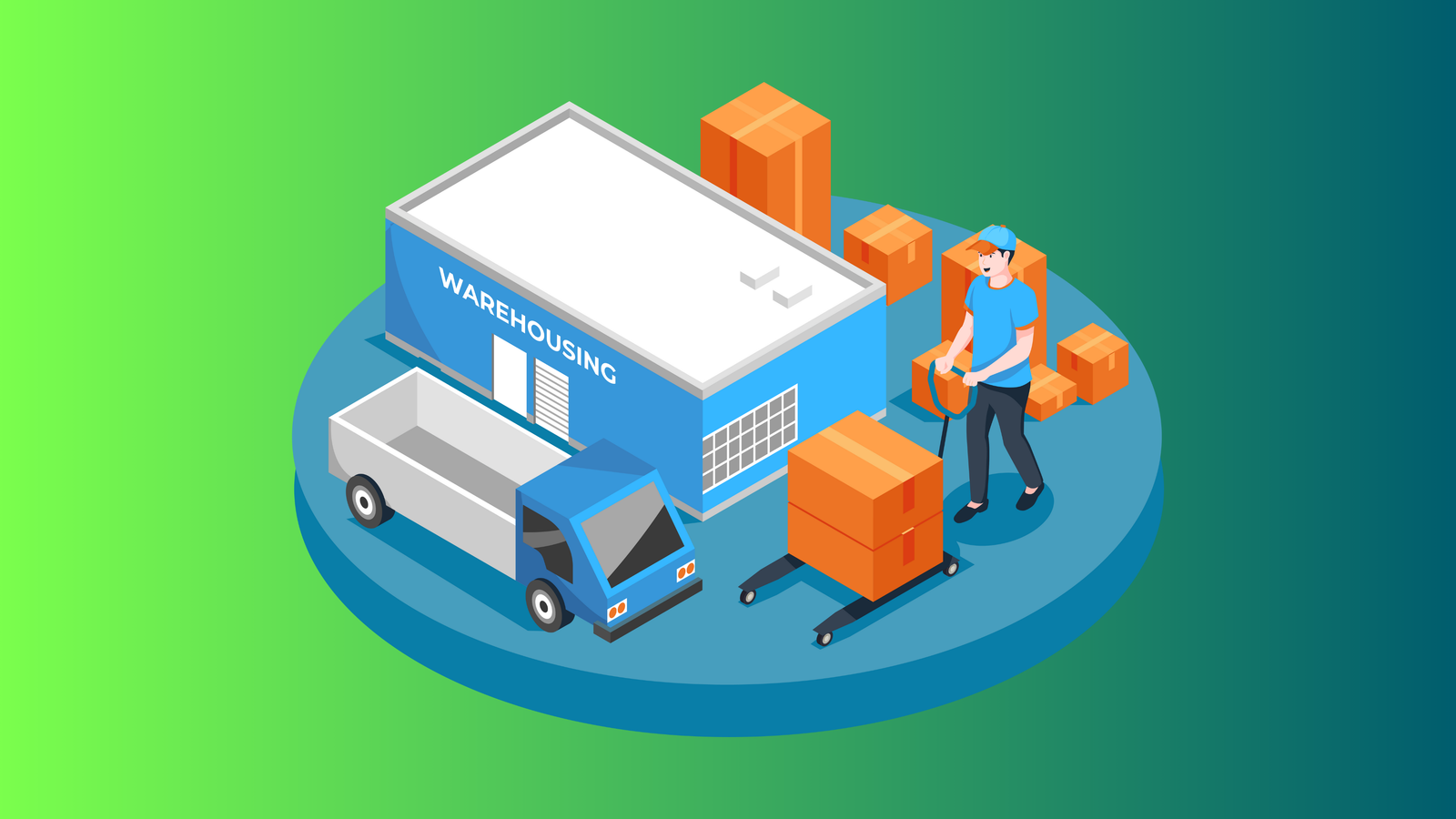
What is a bonded warehouse? It is a secured facility—either government-run or privately owned—where imported goods can be stored, manipulated, or undergo manufacturing without the immediate payment of duties. Think of it as a "tax-neutral" zone. When you bring a container of luxury leather bags from Italy into a facility like an atlanta bonded warehouse, the U.S. government hasn't "collected" on that import yet. The duties only kick in when those bags are sold to a customer in Georgia and leave the building.
Now the logistics math that matters: if you import $1 million worth of goods with a 10% duty rate, that’s $100,000 of cash that disappears from your bank account the moment the ship docks. In a bonded storage warehouse, that $100,000 stays in your pocket until the moment of sale. For a brand scaling quickly, that capital is the difference between hiring more CS agents or running another ad campaign.
How Does a Bonded Warehouse Work in a DTC Environment?
Operators always ask me: "How does a bonded warehouse work when I'm shipping thousands of individual small parcels?" It’s a valid concern because these facilities were originally designed for bulk commodities, not individual polymailers.
Here’s where ops breaks: traditional 3PLs often struggle with the record-keeping required for us bonded facilities. Every item that enters or leaves must be meticulously tracked for Customs and Border Protection (CBP).
-
Entry: Goods arrive and are placed under a "customs bond."
-
Storage: They can stay in bonded storage for up to five years (though I don't know why any DTC brand would want inventory sitting for that long).
-
Withdrawal: When an order is placed, the duties are calculated and paid as the item is cleared for "entry for consumption."
-
Re-export: If you decide to ship those bags to a warehouse in Canada instead, you can move them directly from the bonded warehouse to the border without ever paying U.S. duties.
I remember a specific failure case with a jewelry brand I worked with in 2023. They were importing gold-plated components from Thailand and paying full duties at the Port of Long Beach. When a major quality issue was discovered, they had to ship 40% of the inventory back for rework. Because the goods had already "entered" the commerce of the U.S., they couldn't easily get their duty money back. If they had used bonded warehouse solutions, they could have inspected the goods and returned them to Thailand without ever losing that tax money.
Bonded Warehouse vs FTZ: Which One Do You Actually Need?
A common question I see in logistics forums is the debate over bonded warehouse vs ftz (Foreign Trade Zone). While they sound similar, the differences are significant for your bottom line.
What are bonded warehouses compared to FTZs? A bonded warehouse is specifically for storage and basic "manipulation" (like cleaning or repackaging). An FTZ, however, is much more flexible. In an ftz warehouse, you can actually manufacture products—combining domestic and foreign components—and you only pay duties on the final "finished" product when it enters the U.S. market.
Now the logistics math that matters: if you are just a retailer, a bonded warehouse is usually simpler and cheaper to manage. If you are doing light assembly (like putting together "starter kits" from various international components), an FTZ might be better. But for 90% of the brands using tools like ShipBob or Narvar, the bonded storage model is the most accessible way to protect cash flow.
The Logistics of Atlanta Bonded Warehouse Hubs and Beyond
If you’re looking at where to position your inventory, you’ll notice hubs like an atlanta bonded warehouse are booming. Why? Because they sit at the intersection of major rail lines and a massive international airport.
Choosing the right location for your us bonded facility is about more than just rent. It’s about the "time to customer." Here’s what most brands miss: you can store your "hero" products (your top 10 sellers) in a local 3PL for fast shipping, while keeping your slower-moving or high-duty inventory in a bonded storage warehouse.
I’ve seen honest failure cases where a brand put all their inventory into a bonded facility. Every time they had to ship a single order, the customs paperwork delayed the shipment by 24 hours. They saved $20,000 in duty deferral but lost $50,000 in customer lifetime value because the shipping was too slow. (Don't ask me why they didn't just split the inventory—ops is a series of expensive lessons).
Comparison: Bonded Warehouse vs. Standard 3PL
How to Become a Bonded Warehouse: The Path for 3PLs
Operators always ask me: "How to become a bonded warehouse? My current 3PL isn't bonded, and I don't want to move my stuff."
The process is essentially a marathon of paperwork. A facility must apply to the local Port Director, provide a detailed layout of the building, and post a significant financial bond with the government. They also have to prove they have "Class 1 through Class 11" security measures in place. It’s not something a warehouse does over a weekend.
But if you are a brand of a certain size, you should be demanding that your partners offer bonded warehouse solutions. As global trade becomes more volatile, the ability to "pause" your tax liability is a strategic necessity. If your 3PL isn't willing to go through the process, it might be time to look for one that understands the modern "borderless" e-commerce landscape.
Common question I see: "Is a bonded warehouse worth it for small brands?"
Operators always ask me if they need to be doing $50 million in revenue before they look at what is bonded warehousestorage. Honestly, the threshold is lower than you think. If you are importing goods with a high duty rate (like apparel or footwear, which can be 20%+) and you have at least 60 days of inventory on hand, the math usually works.
If you have $200,000 in duties sitting on your balance sheet, that’s $200,000 you can't spend on inventory for next season. By using bonded storage, you turn that "dead cash" into working capital.
But here’s the tricky part: the administrative fees for a bonded warehouse can eat up the savings if your volume is too low. I once saw a brand try to use a bonded facility for just $10,000 worth of duty deferral. Between the entry fees and the specialized software costs, they actually spent more than if they had just paid the tax. (And yes, I was the one who had to tell the CEO we needed to switch back—not a fun meeting).
The Evolution of the "Smart" Bonded Warehouse
In 2026, we are seeing a shift toward "smart" bonded facilities. These are warehouses that integrate directly with your ERP and tools like Narvar or Optoro.
When a package is scanned out of bonded storage, the customs entry is filed automatically. There’s no manual paperwork. This eliminates the "24-hour delay" I mentioned earlier. If you are evaluating a partner for bonded warehouse solutions, ask them about their API. If they tell you they "fax the forms to the port," run away.
Operations Math: The Real Cost of Duty
Let’s look at the logistics math that matters for a typical month:
-
Import Value: $500,000
-
Duty Rate: 15%
-
Upfront Cost (Standard): $75,000
-
Upfront Cost (Bonded): $0
-
Inventory Turnover: 90 Days
-
Interest on Capital (10%): $1,875 saved in interest alone.
But the real value isn't just the interest; it's the flexibility. If the market shifts and you need to move that inventory to Europe, you do it for free. In a standard warehouse, you’ve already "burnt" that $75,000.
Common question I see: "What is bonded warehouse security like?"
I see this question a lot from brands selling high-value electronics or luxury goods. Because bonded warehouses are regulated by the government, the security is usually top-tier. We’re talking about "Class 9" storage requirements, 24/7 surveillance, and strict access logs.
In some ways, your inventory is safer in a bonded storage warehouse than in a standard 3PL because the 3PL’s license is literally on the line with the federal government. If they lose your stuff, they aren't just answering to you; they’re answering to the Department of Homeland Security.
And honestly, I don't know why more brands don't use this as a selling point for their investors. "We have a government-secured, tax-advantaged supply chain" sounds a lot better than "Our stuff is in a shed in Jersey."
Final Honest Failure: The Refund Delay Impact
I’ll leave you with one more failure case. We had a brand that was so obsessed with the "tax status" of their inventory that they refused to process a refund until the returned item was "re-bonded" in their facility.
Because the bonded warehouse was slow at processing returns, customers were waiting 18 days for their money. We saw their NPS (Net Promoter Score) drop from 70 to 22 in a single month. They were so focused on saving $4 in duty that they were losing thousands of dollars in future sales.
Conclusion: Designing a Resilient Supply Chain
The world of logistics in 2026 is too complex to rely on "standard" storage models. Between shifting trade wars and the need for hyper-fast delivery, the bonded warehouse has evolved from a dusty bulk-storage facility into a strategic tool for the modern DTC operator. Whether you are using an atlanta bonded warehouse to serve the East Coast or a facility near the Port of Tacoma for Asian imports, the goal is always the same: keep your cash liquid and your customers happy.
If you’re ready to see how your logistics can do more than just "store stuff," it’s time to look at your strategy through a bonded lens.