It was 3:00 AM on a Tuesday back in December 2024, and I was staring at a Shopify dashboard that looked like it was bleeding. We were in the middle of a 5.3x return spike following our most successful BFCM to date, but the celebration was short-lived. Our main fulfillment center was completely choked. I remember one specific pallet of returned electronics—roughly $42,000 in inventory—that sat in a "purgatory" corner for three weeks because our team couldn't verify the labels. During this chaos, we started seeing a new name pop up in our tracking logs: UniUni. As an operator, seeing a new last-mile carrier enter your ecosystem is always a mix of curiosity and dread. You start asking the same questions your customers are: "What is this service?" and "Where is my package?" If you’ve ever dealt with a refund backlog that threatened to tank your LTV, you know that the carrier choice is just as important as the product itself.
What is UniUni Warehouse and How Does it Work?
If you’re managing a brand that ships heavily into urban centers like Vancouver, Toronto, or Los Angeles, you’ve likely encountered this carrier. So, what is uniuni warehouse exactly? It isn't your traditional 3PL like ShipBob or a legacy giant like UPS. Instead, UniUni operates as a crowdsourced last-mile delivery model. Think of it as the "Uber" for e-commerce parcels.
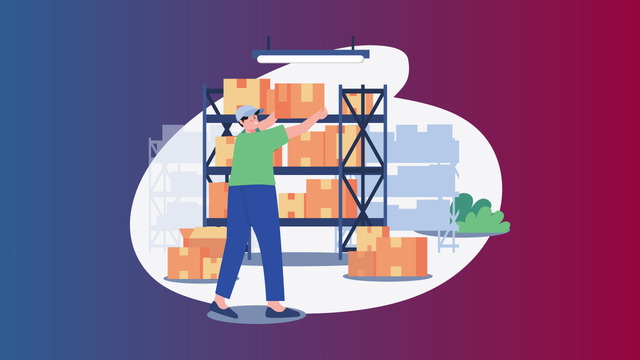
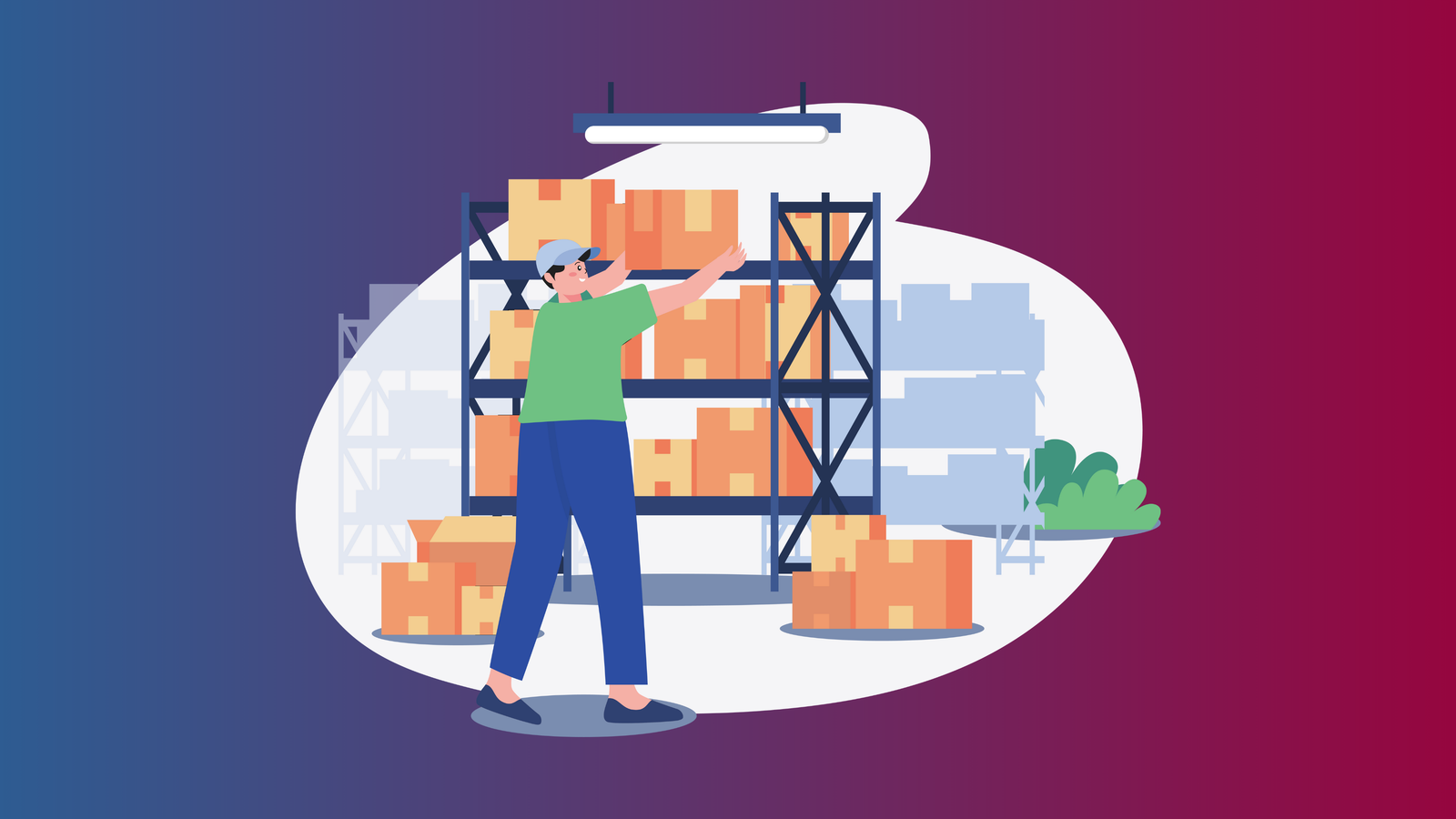
The uniuni warehouse acts as a central sorting hub where massive trailers of consolidated goods are broken down into smaller "routes" for independent drivers. For a DTC operator, this is a double-edged sword. On one hand, the rates are significantly lower than standard commercial ground shipping. On the other hand, the "black hole" factor is real. When a customer asks, "where is uniuni warehouse?" they are usually frustrated because their tracking hasn't updated in 48 hours.
Now the logistics math that matters: every day a package sits in a sorting facility is a day your capital is locked. I’ve seen brands switch to last-mile specialists to save $1.50 on the outbound label, only to lose $10.00 in customer lifetime value because the "delivery experience" felt fragmented. (Honestly, I’ve stayed up far too many nights debating these trade-offs, don't ask why).
Where is the UniUni Warehouse Located?
Finding the physical coordinates of these hubs is often harder than it should be. People are constantly searching for "where is the uniuni warehouse" or "where is uniuni warehouse located" because they want to pick up a package that was "missed." Unlike a FedEx Office or a UPS Store, these warehouses aren't usually customer-facing retail spots.
The uniuni warehouse locations are typically situated in industrial zones near major airports. For instance:
-
In Canada: Large hubs in Richmond (BC), Mississauga (ON), and Calgary.
-
In the US: Rapid expansion into California, Texas, and Florida.
But here’s where ops breaks: if you are relying on these warehouses for your reverse logistics, you’re in for a headache. A uniuni return warehouse is optimized for incoming flow, not outgoing. If a customer tries to "return to sender" using this network, the package often sits in a corner until a manual audit happens. I remember a failure case in 2023 where 150 returns were "lost" in a California sorting hub for two months. We had already refunded the customers, but we couldn't restock the inventory. We essentially paid for the privilege of losing our own products.
Navigating UniUni Reviews and Brand Reputation
As a logistics director, you have to be obsessed with uniuni reviews. Why? Because the carrier is the last "human" touchpoint your brand has with the customer. If you look at most public forums, the reviews are polarized. You have customers who love the speed in high-density areas, and others who are hunting for a uniuni return warehouse phone number because their package was left in a lobby.
And let’s be real—last-mile delivery is brutal. But when you’re using enterprise tools like Narvar or Optoro to manage expectations, you need a carrier that provides "granular" data. If the uniuni warehouse doesn't scan the item at every transition, your Narvar dashboard looks like a bunch of dead links.
So, what is the operator's play? You use UniUni for what it's good at: cost-effective outbound shipping to major cities. But you never, ever use a last-mile sorting hub as your primary return strategy. That is where margins go to die.
The Standard Return Problem: Why Warehouses are Overwhelmed
Before we look at better solutions, we have to acknowledge the failure of the "centralized" model. Whether it’s a uniuni return warehouse or a massive ShipBob facility, the process is inherently flawed for modern e-commerce.
-
Shipping Air: You are paying to ship a cardboard box half-filled with air across the country.
-
The Label Tax: You’re paying UPS or FedEx $12 to $18 for a return label on a $40 item.
-
Labor Congestion: Your warehouse team is focused on shipping new orders (the profit), so returns (the loss) get pushed to the back.
-
Inventory Decay: Every day an item sits in a uniuni warehouse is a day it’s not being resold.
I once saw a brand pay $27 in total processing costs for a $19 resale item. They were so committed to "getting the item back to HQ" that they didn't realize they were losing money on the transaction. (Yes, I’ve panicked over these spreadsheets too—it's a rite of passage in e-commerce ops).
Operators Always Ask Me: "Where is the UniUni warehouse located for my returns?"
Here’s something every ops leader asks when they see a "failed delivery" or a return request: "Can I just have the customer drop it back at the hub?"
My answer is always a resounding no. Even if you know where is uniuni warehouse located, it isn't a retail return center. If a customer shows up there, they will likely be turned away, or worse, the package will be accepted and then vanished into a pallet of 10,000 other items. These facilities are designed for flow, not for storage or individual customer service.
Now the logistics math that matters: if your return process relies on a carrier's sorting hub, your "return-to-shelf" time will always be north of 14 days.
Common Question I See: "How do I find a UniUni return warehouse phone number?"
One question I see constantly is from customers (and desperate CS agents) trying to track down a package. Honestly, finding a direct uniuni return warehouse phone number for a specific local hub is nearly impossible. They operate at such high volume that they don't have front-desk receptionists.
The "smart" move for a brand is to provide a return portal (like Loop Returns or Happy Returns) that manages the communication for you.
Honest Failure: The Peak Season Backlog of 2023
I’ll admit to a major failure during the 2023 holiday season. We had just integrated a new last-mile carrier to save on costs. We didn't realize their sorting hub in New Jersey had a 20% "mis-scan" rate during peak volume.
The result? Over 400 packages were marked as "Arrived at uniuni warehouse" but then never moved. Our CS team spent 40 hours a week just answering emails for those 400 people. We ended up having to reship all 400 orders at our own expense. The "savings" from the last-mile carrier were wiped out in 48 hours. The lesson: never sacrifice visibility for a lower base rate. (And yes, I had to explain that ROI disaster to the CFO—it wasn't a fun conversation).
Common Question I See: "What is uniuni warehouse technology like?"
Operators always ask about the tech stack of these last-mile players. UniUni uses a highly digitized proprietary system that allows their crowdsourced drivers to optimize routes via an app. It's actually quite impressive.
But here is where the tricky part comes in: their tech doesn't always "talk" to your tech. If you’re using ShipBob for fulfillment and UniUni for delivery, and the data doesn't sync perfectly, you get "ghost" packages. This is why I always recommend using a robust tracking middleware like Narvar to bridge the gap between carrier data and customer expectations.
Conclusion: Picking the Right Path for 2026
The e-commerce landscape is more crowded than ever, and your logistics strategy is your most powerful lever for profitability. While carriers like UniUni offer interesting "last-mile" opportunities, they are only one piece of the puzzle. You have to understand what is uniuni warehouse capability and where its limits lie.
If you’re still relying on a centralized uniuni return warehouse strategy, you’re likely overpaying for a suboptimal experience. My balanced assessment? Use last-mile specialists for high-density outbound shipping.