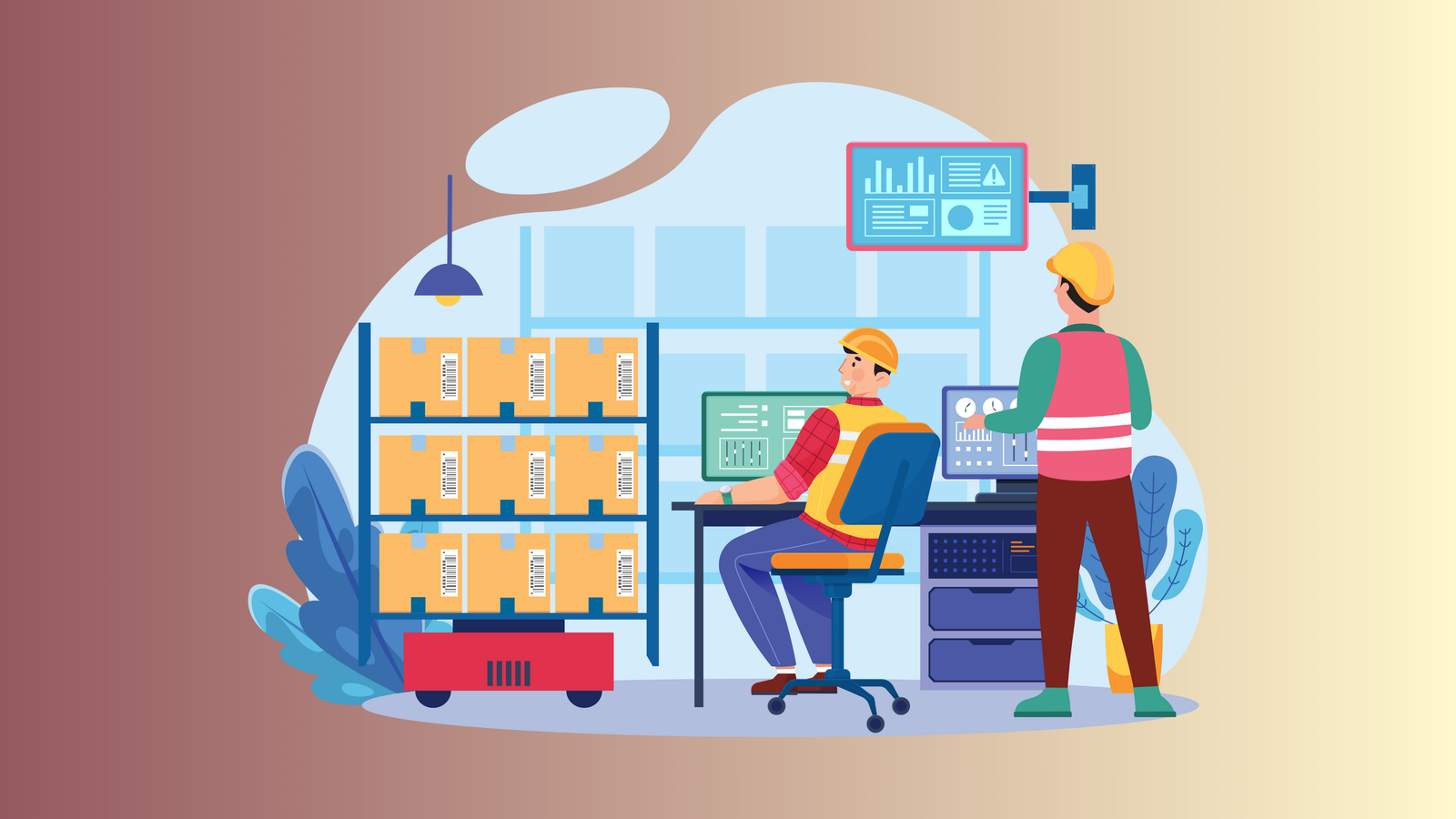
I remember standing in the middle of our New Jersey fulfillment center in mid-January 2025, staring at a literal mountain of cardboard. We’d just survived a staggering 5.3x return spike during the BFCM (Black Friday Cyber Monday) rush, and the physical reality of a bottleneck wasn't just a metaphor—it was a wall of inventory blocking our fire exits. We had thousands of units of apparel sitting in "return purgatory," and our primary warehouse racking was completely maxed out. My floor manager was telling me we needed to lease another 10,000 square feet just to breathe. It’s a moment every operator dreads, but it’s the inevitable result of scaling sales without scaling your "air rights." If you aren't obsessing over how you stack your atoms, you aren't running a business; you’re managing a very expensive, very dangerous game of Tetris.
The Basics of Vertical Growth: Understanding Warehouse Racking
If you’re a founder moving out of a garage or an ops lead taking over a new facility, you’ve likely realized that floor space is a finite resource. Warehouse racking is how you reclaim the vertical volume of your building. But it’s not as simple as buying a few metal shelves and bolting them together. There is a science to the steel.
When people talk about a warehouse rack, they usually refer to selective pallet racking. This is the most common type because it allows direct access to every pallet. But for DTC brands with high SKU counts, you might need warehouse racking shelves designed for "each" picking rather than full pallets. I recall an anecdote from a footwear brand in 2024 that invested heavily in warehouse pallet racks but realized their pickers were wasting four minutes per order just climbing ladders. They had the storage, but they’d killed their velocity.
Now the logistics math that matters: every pallet position in a professional 3PL like ShipBob costs you between $15 and $40 per month. If your industrial shelving and racking isn't optimized for your SKU dimensions, you’re essentially paying a "luxury tax" on empty air inside your boxes. (In my opinion, if your warehouse looks like a chaotic thrift store, your bank account probably looks like one too).
The Dollars and Cents: How Much Does Warehouse Racking Cost?
Operators always ask me, "how much does warehouse racking cost?" and the answer is rarely what they want to hear. It’s not just the price of the steel. You have to factor in the uprights, the beams, the wire decking, the shipping, and the professional installation.
-
New selective racking: Expect to pay $50–$90 per pallet position.
-
Used industrial racking: You can often find deals for $30–$50 per position, but you have to be careful about structural integrity.
-
Installation: Professional crews usually charge $15–$25 per pallet position.
But wait, there’s a hidden cost. I recall an honest failure case where a brand bought a huge lot of used industrial rackingfrom a warehouse liquidator near warehouse rack Hempstead Rd. They thought they’d saved $20,000. However, when the city inspector came by, the racks didn't have the original load-rating plates. They were forced to dismantle the entire system and buy new, certified steel. That $20,000 "saving" turned into a $60,000 nightmare of labor and downtime.
Safety First: What is OSHA Requirements for Warehouse Racking?
This is where things get serious. If you’re running a warehouse in 2026, you cannot ignore the legalities. What is osha requirements for warehouse racking? OSHA doesn't have one specific "racking" clause, but they use the General Duty Clause to enforce safety standards.
Key requirements include:
-
Load Rating Labels: Every warehouse rack must have a visible plate stating its maximum capacity.
-
Structural Integrity: Racks must be free from visible damage, rust, or bends.
-
Anchoring: All warehouse pallet racks must be securely bolted to the floor.
-
Maintenance: You must have a documented schedule for how to inspect a warehouse rack.
I’ve seen a warehouse get shut down for 48 hours because a forklift driver clipped an upright and the manager didn't report it. (Honestly, a collapsed rack is the fastest way to lose your business and your sanity). You need to treat your storage racks industrial setup like a high-performance machine, not just a piece of furniture.
How to Label Warehouse Racking for Peak Efficiency
If your warehouse team is wandering the aisles like lost tourists, your labeling is broken. Learning how to label warehouse racking is the secret to sub-24-hour fulfillment. You need a logical alpha-numeric system: Zone-Aisle-Bay-Level-Position.
For example, A-04-12-C-02 tells a picker exactly where to go. If you’re using enterprise tools like Narvar for tracking or ShipBob for WMS, your digital logic must match your physical labels. I recall an anecdote where a beauty brand mislabeled their warehouse racks during a Q4 move. Their pick error rate spiked to 12%, and they had to issue $8,000 in gift cards to angry customers who received the wrong shade of lipstick.
Now the tricky part regarding logistics: labels aren't just for pickers. They’re for the system. If your storage racks industrial labels aren't scannable, you’re still doing manual data entry. And in 2026, manual entry is just another word for "impending disaster."
How to Install Warehouse Racking Without Breaking the Floor
If you’ve decided to buy a system, you need to know how to install warehouse racking correctly. Step one is checking your floor’s PSI (Pounds per Square Inch) rating. If you put 5,000 lbs of inventory on a rack that sits on a 3-inch concrete slab, you’re going to have a catastrophic failure.
You also need to account for "Flue Space." This is the gap between back-to-back racks that allows fire sprinklers to reach the bottom levels. If you block your flue space, the fire marshal will shut you down faster than a bad Facebook ad campaign. (I’m of the opinion that you should always hire a professional crew for the first install; watching a YouTube video is not enough when people’s lives are on the line).
Managing the Chaos: How to Inspect a Warehouse Rack
A warehouse rack is under constant stress. Forklift impacts are inevitable. That’s why you must know how to inspect a warehouse rack on a weekly basis. Look for:
-
Plumbness: Is the rack leaning more than 0.5 inches over its height?
-
Baseplate Damage: Are the bolts loose or sheared?
-
Beam Deflection: Are the horizontal beams bowing more than 1/180th of their span?
I remember a failure case with a wellness brand where a rack began to lean. The manager noticed it but "waited until after the holidays" to fix it. A week later, a pallet of protein powder shifted, causing the whole bay to buckle. They lost $14,000 in product and had to shut down the aisle for four days. (Parenthetically, I’ve often wondered why brands spend $100k on influencers but won't spend $500 on a rack repair kit).
Common question I see: Is used industrial racking worth the risk?
Operators always ask me... "Common question I see: Should I just buy used steel?" My answer: Only if you have a certified engineer sign off on it. Used industrial racking is a great way to save cash, but you don't know the history of that steel. Was it in a flood? Was it overloaded? Did a forklift hit it and the previous owner just painted over the dent?
If you’re shopping for a warehouse rack, focus on "Tear Drop" style. It’s the industry standard for a reason—it’s easy to find replacement parts and compatible beams. If you buy a "Proprietary" style, you’re locked into that one manufacturer for life. (I’m still uncertain why brands choose specialized racking for standard parcel items; it’s a recipe for future headache).
Operators always ask me... "How do I handle the refund delay impact on my space?"
Here’s something every ops leader asks. If your returns are taking 21 days to process, your warehouse racking is essentially a graveyard. Customers are hounding you on Narvar and Loop, while your team is hounding you for more space.
Conclusion: Balancing the Art and the Atoms
In the 2026 e-commerce landscape, your warehouse racking is either an engine for growth or a anchor on your P&L. It’s the physical manifestation of your supply chain strategy. While the centralized warehouse model served us well for a decade, the costs of shipping, labor, and DC space have made it a bottleneck. By professionalizing your internal storage, you stop managing a warehouse and start managing a velocity engine.
Would you like me to run a "Space Density Audit" to see how much cash you could unlock by clearing your warehouse pallet racks of return inventory?
FAQ
Operators always ask me: How high can I stack my warehouse racks? It depends on your ceiling height, your forklift's reach, and your fire sprinkler system. Most standard DTC warehouses use 12–16 foot uprights, but "High-Bay" facilities can go over 40 feet. Always check your local fire code for "High-Pile Storage" permits.
How do I find a reputable supplier for a warehouse rack Hempstead Rd? Look for suppliers who offer both engineering services and installation. Don't just buy the steel; buy the solution. A good supplier will help you map out your "Travel Time" to ensure your pickers aren't walking five miles a day.