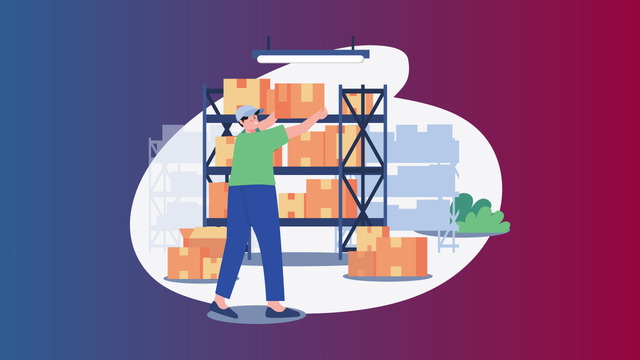
I remember standing in the back of a 50,000-square-foot fulfillment center in mid-January 2025, staring at a literal wall of cardboard. We’d just survived a staggering 5.3x return spike during the BFCM (Black Friday Cyber Monday) rush, and the physical reality of a bottleneck wasn't just a metaphor—it was a wall of inventory blocking our outbound lanes. Our Shopify store was still taking orders, but our team was paralyzed. We had plenty of stock "somewhere" in the building, but because our tracking was fractured, we couldn't find the units we needed to ship new orders. It was a wake-up call. We were scaling fast, but our lack of a unified order management software strategy was turning our success into a liquidity nightmare. If you aren't obsessing over the lifecycle of an order from the first click to the final return, you aren't running a business; you’re managing an expensive accident.
What is Order Management Software and Why is Your Brand Clogging?
If you’re new to the operations seat, you might ask, "what is order management software?" in the context of a high-velocity brand. At its core, it is the connective tissue between your storefront and your warehouse floor. Without it, you’re just a website taking money and a warehouse hoping for the best.
Here’s where ops breaks: we often treat "Shipping" and "Returns" as two separate departments. In reality, they are two sides of the same coin. I recall an anecdote from a footwear brand in early 2024 that had plenty of physical stock in their 3PL, but their order management software small business dashboard showed them as "Sold Out." They were losing $5,000 in revenue every day because their software didn't include a real-time sync with their returns pile. They had 800 pairs of boots sitting in an uninspected "returns corner" that could have been fulfilling new orders. (And yes, I’ve panicked over these spreadsheets too, realizing we were essentially paying "rent" on inventory we were telling customers they couldn't buy).
Now the logistics math that matters: every hour an order sits in a "Pending" status is an hour of depreciating customer trust. If your ecommerce order management software doesn't prioritize speed and accuracy, your Customer Acquisition Cost (CAC) is effectively wasted.
The Cloud Revolution: What is Cloud-Based Order Management Software?
When people ask, "what is cloud-based order management software?" they are looking for the modern standard of scalability. Gone are the days of on-premise servers that crash when a TikTok goes viral. Cloud-based systems act as a single source of truth that you can access from a laptop in a coffee shop or a handheld scanner on the warehouse floor.
This type of order management system software aggregates orders from Shopify, Amazon, and wholesale accounts, then routes them to the best fulfillment node—whether that's a ShipBob warehouse or a retail store. The "Cloud" aspect means your inventory levels are updated in milliseconds. If you sell the last medium hoodie on Amazon, your Shopify store knows it instantly.
But let’s be real—the "Information Flow" is often the messiest part. You have data coming from your storefront, your 3PL, and your manufacturers. If these systems don't talk to each other, you’re flying blind. (I’m of the opinion that a brand is only as good as its last data sync). I recall an honest failure case with a skincare brand where their order management system broke down. Their website said they had 500 units of a face cream in stock, but their physical shelf was actually empty due to a sync error. They took 500 orders they couldn't fulfill, leading to a massive refund backlog and a PR nightmare on Narvar.
Managing the Workflow: What is Work Order Management Software?
For brands that do more than just "pick and pack," the question shifts to: "what is work order management software?" If you are kitting products, doing custom embroidery, or managing a repair center for hardware, you need more than just a shipping label.
Work order management software tracks the labor and parts required to transform an item. Think of it as the "internal" version of an order. How work order management software can help is by providing visibility into the "Value-Add" stage. It ensures your team isn't standing around waiting for components.
In the world of hardware returns, work order management software is vital. When a device comes back, it needs to be graded, wiped of data, and potentially repaired. Without a work order management system, these items sit in a "to-be-fixed" bin for months. I’ve seen brands lose $100k in inventory value because their repair velocity was so slow. (Parenthetically, I’ve always found it ironic that we spend millions on marketing but pennies on the software that actually fixes the product when it breaks).
Procurement and the Inbound Pillar: Purchase Order Management Software
We can't talk about outbound flow without talking about the inbound. Purchase order management software is the "Inbound" pillar of your operation. This is where you tell your factory exactly what you need and when. If your order management software doesn't include a robust PO module, you are guessing on your lead times.
And here is where the "Bullwhip Effect" kills margins. If you over-order because you don't know your true return rate, you end up with "Dead Stock." But if you under-order because your ecommerce order management data is lagged, you stock out. I recall a failure case where a brand had $200k in inventory "in flight" across the ocean and another $50k in a returns pile. They were "rich" on paper but couldn't pay their marketing agency because their cash was tied up in atoms that weren't moving.
When you look at how to evaluate procurement software for order and invoice management, you have to ask: does it sync with my returns? If it doesn't, you're buying new stuff while perfectly good stuff is sitting in a box at the back of the warehouse.
Order Fulfillment Software: The Holy Grail of Scaling
The goal of any modern order management software is total automation. You want a "hands-off" flow where the system decides the cheapest, fastest way to get a product to a customer.
But here is where most people fail: they implement the software but don't fix the physical route. If you’re using Loop or Happy Returns for the customer-facing side, you have the "Data." But if you're still shipping that item across the country, you haven't solved the "Atoms." I’m still uncertain why more brands don't prioritize physical decentralization as a core part of their order management strategy. (I’m of the opinion that the "Centralized DC" is becoming an obsolete model for returns).
Order Management Software for Small Business: Starting Lean
Operators always ask me if they can just "wing it" with a basic inventory tool until they hit $10M in revenue. My answer: you can, but it will be much more expensive later. Order management software for small business doesn't have to be a six-figure implementation. There are lean, cloud-based tools that allow you to grow without the headache.
If you are a high-volume brand, you need a dedicated order management system software that can handle complex routing rules. For example, if an order contains three items, does your system split the shipment? Does it wait for all three to be in one place? Does it fulfill from a local hub? These are the features that save you thousands in shipping fees.
I’ve seen a order management software small business fail because they thought "inventory management" was the same as "order management." It's not. Inventory is what you have; Order management is what you do with it.
The Honest Failure: The "Black Friday" Backlog
I want to share an honest failure case that still haunts me. A few years ago, we worked with an apparel brand that had a "perfect" ecommerce order management software setup. Or so they thought. They had a 5.3x return spike during BFCM. They were prepared for the outbound, but their warehouse only had one "Returns Clerk."
The backlog became so severe that they didn't finish processing holiday returns until mid-February. Because they couldn't restock the items fast enough, they missed the entire January sales window for those SKUs. They had the inventory; they just couldn't "reach" it because it wasn't scanned into the system.
Evaluating the Tech Stack: What to Look For
When you're out there shopping for order management software, don't get distracted by flashy dashboards. You need features that actually impact your bottom line:
-
Multi-Location Inventory: Treating every hub, store, and 3PL as a sellable node.
-
Intelligent Routing: Shipping from the closest point to the customer.
-
Automated Return-to-Stock: Speeding up the recovery of returned items.
-
Integration with Logistics Nodes: Talking directly to ShipBob, Narvar.
And let’s look at the "Refund Delay Impact." When you use a centralized warehouse, your customer waits 10-14 days for a refund. This leads to a massive spike in customer service tickets.
Conclusion: Balancing the Art and the Atoms
In the 2026 e-commerce landscape, the choice of order management software is your brand's biggest opportunity for profit. The outbound leg is a commodity; everyone can ship a box. The winning brands are the ones that can handle the complexity of the "Return Loop" with speed and efficiency. While the centralized warehouse model served us well for decades, the costs of shipping and labor have made it a bottleneck for growth. By leveraging a modern order management system, you stop "warehousing" your money and start "moving" it.
It's time to stop letting the "ghost" of your inventory haunt your P&L.
FAQ
Operators always ask me: What is the main difference between an OMS and a WMS? A WMS (Warehouse Management System) manages what happens inside the four walls of one building—picking, packing, and bin locations. An order management software manages the order across all locations—multiple warehouses, retail stores.
Common question I see: Does order management software help with fraud? Absolutely. By using verified inspection nodes and syncing that data with your ecommerce order management, you can ensure that you only issue refunds for actual products, not "bricks" or empty boxes.