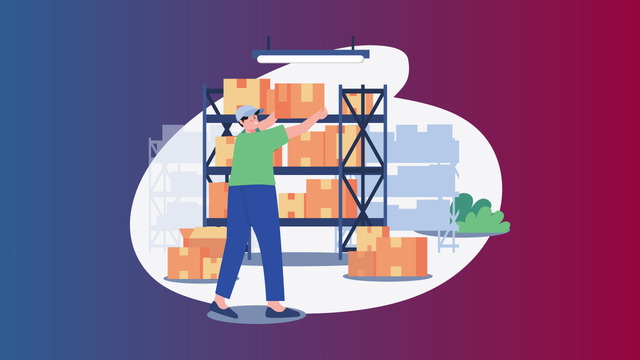
I remember standing in the back of our primary fulfillment center in mid-January, staring at a literal wall of cardboard. We’d just survived a massive 5.3x return spike during the BFCM (Black Friday Cyber Monday) rush, and our floor space was physically running out. Every square foot was occupied by "zombie stock"—items that were technically sold but now lived in a purgatory of uninspected returns. It’s the ultimate nightmare for any DTC operator: having plenty of paper profit but zero liquidity because your cash is rotting on the shelves in a clogged intake lane. I realized then that while we were great at the "buy" side of the business, our understanding of the full loop—the actual physical movement of every atom we owned—was dangerously incomplete. If you aren't obsessing over every link in the chain, you aren't running a business; you’re just a passenger in a very expensive logistics experiment.
Breaking Down the Basics: What is Supply Chain?
If you’re new to the operations space, you’re likely asking, "what is supply chain?" in the context of a 2026 e-commerce brand. At its most fundamental level, it’s a series of handoffs. It starts with raw materials (think cotton in a field) and ends with a finished product (a t-shirt) landing on a customer's doorstep. But in today’s world, the chain doesn't stop at the doorstep. It includes the "reverse" leg—the returns—that can make or break your P&L.
A traditional supply chain description often looks like a straight line: Supplier -> Manufacturer -> Distributor -> Retailer -> Consumer. But in a DTC environment, that line is a tangled web. You might be sourcing zippers from Japan, fabric from Italy, and sewing in Vietnam, only to ship the finished goods to a 3PL like ShipBob in Nevada.
Now the logistics math that matters: every time a product stops moving, it costs you money. Storage fees, insurance, and the "opportunity cost" of capital are silent killers. I recall an anecdote from a footwear brand in 2024 that kept a massive "safety stock" of its core SKU. They thought they were being prepared. However, by the time they hit Q3, they realized their inventory was aging faster than their sales were growing. They had enough sneakers to last a year, but no cash to buy the new winter line. (Honestly, staring at a warehouse full of shoes you can't sell while your bank account is at zero is a special kind of stress).
The Strategic Layer: What is Supply Chain Management?
So, if that’s the chain, then what is supply chain management (SCM)? SCM is the "brain" of the operation. It is the active oversight and optimization of those handoffs to maximize customer value and achieve a sustainable competitive advantage.
When people ask, "what is supply and chain management?" they are usually referring to the dual effort of managing supply (your production) and the chain (the logistics). It involves everything from demand forecasting to vendor negotiation. If you’re using enterprise tools like NetSuite or Oracle, you’re doing SCM. You’re trying to predict the future so you don’t end up with too much or too little.
Here’s where ops breaks: most brands treat SCM as an outbound-only discipline. They focus 99% of their energy on getting the product to the customer and 1% on what happens when the customer says "no thanks." In 2024, a partner brand was spending $27 in return processing for a $19 resale item. Because their supply chain management didn't account for the labor cost of returns, they were literally paying for the privilege of losing money on every exchange.
Decoding the Acronym: What is SCM?
You’ll often hear veterans in the warehouse toss around the term: "what is scm?" It stands for Supply Chain Management, but in practice, it’s the art of managing "The Three Flows":
-
Product Flow: The physical movement of goods.
-
Information Flow: The data—tracking numbers, inventory levels, and order statuses.
-
Financial Flow: The cash—credit terms, payment schedules, and refunds.
If any one of these flows is blocked, the whole system fails. I recall an honest failure case with a skincare brand where their information flow broke down. Their website said they had 500 units of a face cream in stock, but their warehouse stock management system was actually empty due to a sync error. They took 500 orders they couldn't fulfill, leading to a massive refund backlog and a PR nightmare.
And let’s be real—the "Information Flow" is often the messiest part. You have data coming from Shopify, your 3PL, and your manufacturers. If these systems don't talk to each other, you’re flying blind. (I’m of the opinion that a brand is only as good as its last data sync).
The Complexity of Global SCM: What is the Supply Chain in 2026?
The question "what is the supply chain?" has changed since the early 2020s. We’ve moved from "Just-in-Time" to "Just-in-Case" and now back to a localized, "Hyper-Efficient" model. Today, supply chain management is about resilience. It’s about not having all your eggs in one basket (or one port).
Now the logistics math that matters involves the "Landed Cost." This isn't just what you paid the factory; it’s the factory cost + shipping + duties + the cost of the return. If your return rate is 30% (standard for apparel), and your return logistics are inefficient, your "True Landed Cost" might be 40% higher than you think.
We’ve seen brands use tools like Narvar to provide visibility and Loop Returns to encourage exchanges. These are great, but they only handle the digital side of the chain. The physical side—the actual trucks and warehouses—is where the real money is won or lost.
Operators always ask me... "How do I know if my supply chain is broken?"
Common question I see: "Our sales are up, but our bank balance is down. Is that a supply chain issue?" Almost certainly. If you have "negative cash flow" despite high sales, your money is likely trapped in "Inventory Sludge"—items that are in transit, sitting in a warehouse backlog, or waiting to be refunded.
Check your Inventory Turnover Ratio. If it’s slowing down, your chain is clogged. I recall a failure case where a brand had $200k in inventory "in flight" across the ocean and another $50k in a returns pile. They were "rich" on paper but couldn't pay their marketing agency. (In my opinion, liquidity is the only metric that matters at 2 AM when you’re looking at a P&L).
Common question I see: Is SCM only for huge companies?
Operators always ask me if they can just "wing it" until they hit $10M in ARR. The answer is: You can, but it will be much more expensive later. Implementing a basic system for warehouse management and a clear supply chain description early on saves you from the "re-platforming nightmare" that happens when you outgrow your spreadsheet.
You don't need a massive team, but you do need to understand the "Logistics Math." Use tools like Optoro for liquidation and Happy Returns for drop-offs. These services allow you to "lease" a high-end supply chain without building it yourself. But remember, the software is just the interface; you still need to care about where the boxes are actually moving.
Honest Failure: The "Black Friday" Backlog
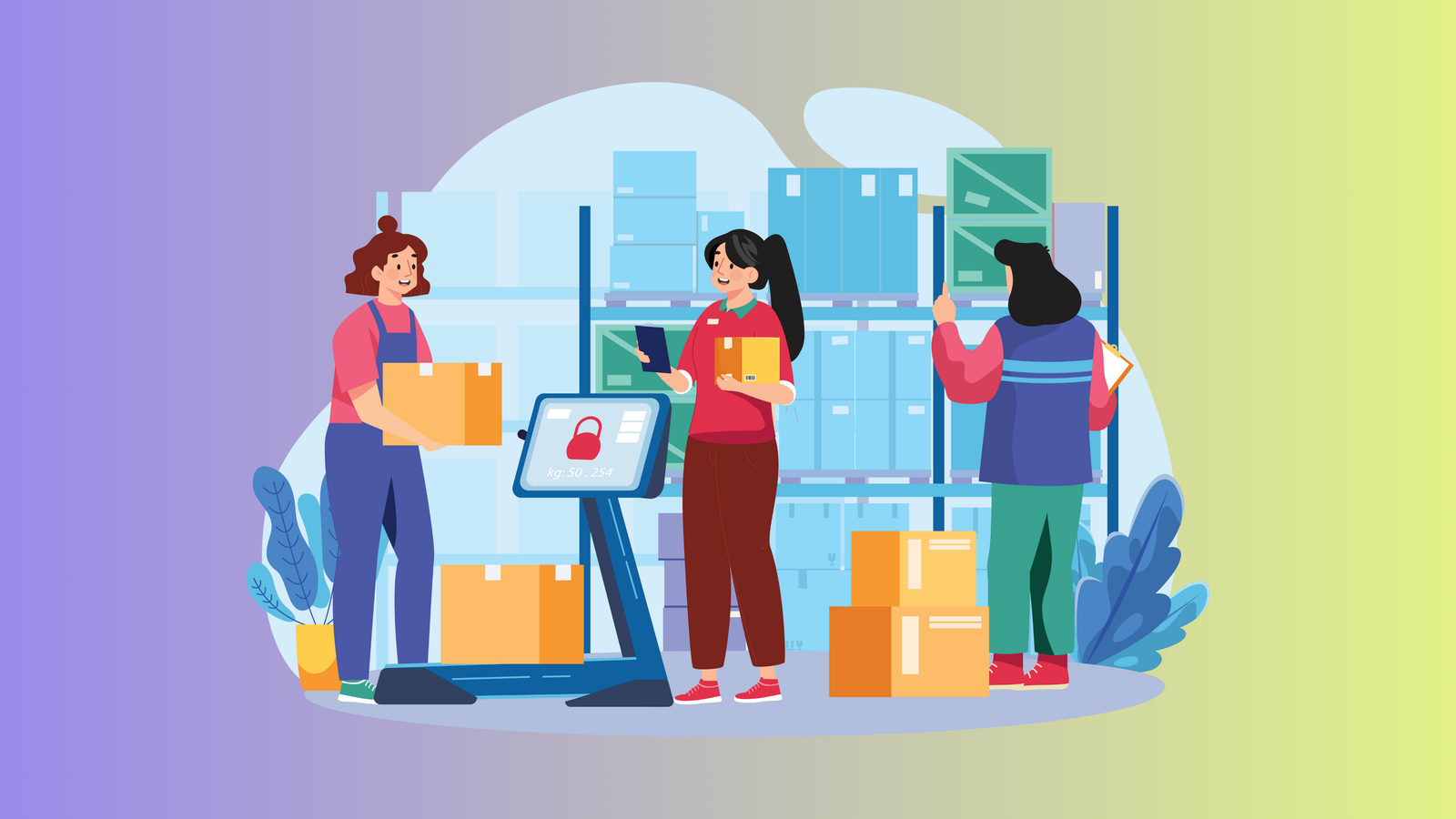
I want to share an honest failure case that still haunts me. A few years ago, we worked with an apparel brand that had a "perfect" supply chain. Or so they thought. They had a 5.3x return spike during BFCM. They were prepared for the outbound, but their warehouse only had one "Returns Clerk."
The backlog became so severe that they didn't finish processing holiday returns until mid-February. Because they couldn't restock the items fast enough, they missed the entire January sales window for those SKUs. They had the inventory; they just couldn't "reach" it. This is the "Centralization Tax"—the hidden cost of sending everything to one building.
Conclusion: Turning Your Chain into a Loop
In the 2026 e-commerce landscape, the answer to "what is a supply chain" is that it’s your brand's biggest opportunity for profit. The outbound leg is a commodity; everyone can ship a box. The winning brands are the ones that can handle the complexity of the "Return Loop" with speed and efficiency.