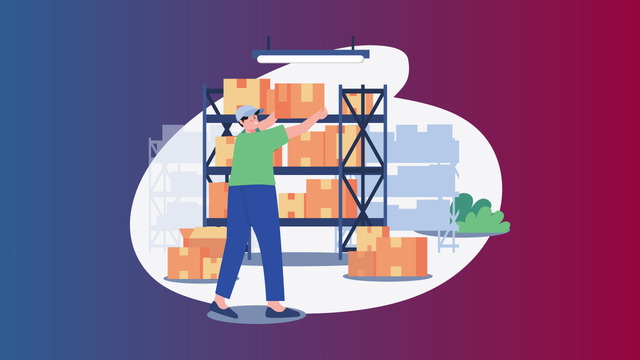
I remember sitting in our warehouse office in early January 2025, staring at a spreadsheet that was flashing red. We’d just survived a 5.3x return spike during the BFCM rush, and our floor space was physically running out. We had thousands of customers asking the same question: "When will my order ship?" On paper, we were sold out of our hero SKU. In reality, we had about 1,200 units of that exact product sitting in a "returns purgatory" pile at the back of the building, waiting for inspection. Because we couldn't process those returns fast enough, we had to list the product as back-ordered on our site. It’s a heartbreaking position for an operator—seeing demand you can't satisfy while the inventory you need is technically in the building but "invisible" to your system. That’s when I realized that understanding what is a backorder isn't just about supply chain jargon; it's about the literal survival of your brand's cash flow.
Quick overview
Understanding the Basics: What is a Backorder Item?
In the simplest terms, backorder meaning refers to a temporary out-of-stock situation where the customer is still allowed to place an order with the promise of future delivery. Unlike an item that is "Out of Stock" (which usually means the "Buy" button disappears), a backorder keeps the revenue flowing while you wait for your manufacturing or replenishment cycle to catch up.
But here’s where ops breaks: if you don't communicate clearly, a backorder becomes a customer service nightmare. I’ve seen honest failure cases where brands took the money for backordered items but didn't update their ship dates for three weeks. The result? A massive spike in "Where is my order?" tickets that clogged their support team and led to a 12% chargeback rate. (In my opinion, if you can't ship within 14 days of the promised backorder date, you shouldn't be taking the order at all).
Now the logistics math that matters: every day an item is on backorder, the probability of cancellation increases by roughly 2%. If you have $100,000 in backorders and a 20-day lead time, you are risking $40,000 in lost revenue just by being slow. This is why having a real-time view of your inventory—including what is currently being returned—is vital.
The Physical Reality: What is a Backordered Item in the Warehouse?
When we ask what is a backordered item, we have to look at where the inventory actually is. Often, a backorder occurs because of a disconnect between the "At-Warehouse" inventory and the "In-Transit" inventory.
I recall an anecdote from a footwear brand in 2024. They had 500 pairs of boots available for backorder on their site because their shipment was stuck at the Port of Long Beach. Meanwhile, they had 200 pairs of those same boots sitting in a returns backlog at their 3PL. Because their warehouse management system (WMS) didn't talk to their returns portal, those 200 pairs were effectively "dead." They were paying $27 in return processing labor for items that could have been used to fulfill active backorders immediately.
So, what is a backorder if not a failure of inventory visibility? If you’re using enterprise tools like ShipBob or NetSuite, you have the data, but you often lack the "actionable" node. You see the inventory is "pending," but you can't get it into a box. And let's be real—nothing is more frustrating than seeing a customer cancel a backorder for an item that is currently being restacked by a temp worker two aisles away.
Strategies for Managing Backordered Items
When you decide to list an item as available for backorder, you are making a promise. To keep that promise, you need a tech stack that works in harmony.
-
Narvar: For proactive communication. If a backorder is delayed, tell the customer before they ask.
-
Loop or Happy Returns: To manage the initial return data. If a customer is returning a "medium" and you have a backorder for a "medium," the system should flag it.
-
Optoro: For liquidating the items that shouldn't go back into your backorder pool (e.g., damaged goods).
-
ShipBob: For the heavy lifting of outbound fulfillment.
But here is where the P&L gets ugly. Most brands pay for the outbound shipment of the backorder, the return shipping of the original item, and the labor for both. By the time the backordered item is delivered, you might have $40 in logistics costs on a $60 product. (I’m of the opinion that the "Centralized DC" model is actually a tax on your growth).
And let's look at the "hidden" failure: over-promising. Start with a conservative ship date. It is much better to ship a backorder three days early than one day late. I’ve seen brands lose "Lifetime Value" (LTV) because they treated a backorder as a secondary priority. In reality, a backorder customer is your most loyal fan—they are willing to wait for you. Don't let them down with poor ops.
Common question I see: Is a backorder the same as a pre-order?
Operators always ask me this when they're planning a launch. The answer: Not exactly.
-
Pre-order: You’ve never had the stock. You’re gaugeing demand.
-
Backorder: You had the stock, ran out, and are waiting for more.
What is a backordered item in terms of consumer psychology? It’s a "safety net." The customer knows the product is real because other people have already bought it (and perhaps returned it). A pre-order is a leap of faith. I’m still uncertain if most small brands should use backorders for everything; sometimes it's better to just mark it "Out of Stock" to create a sense of scarcity.
Operators always ask me: How do I calculate my backorder rate?
Common question I see: "How much backorder volume is 'too much'?" Now the logistics math that matters:
If your rate is over 10%, your supply chain forecasting is broken. You are either under-buying or your manufacturer is failing you. I recall an honest failure case with an apparel brand in 2024. Their backorder rate hit 25% during a viral TikTok moment. They were so excited about the sales that they didn't realize their manufacturer had a 90-day lead time. By the time the backordered items arrived, the "trend" had passed, and 40% of the customers requested a refund immediately upon delivery. It nearly bankrupted them.
Conclusion: Turning Backorders into Opportunities
Understanding what is a backorder is the first step toward mastering your brand's inventory lifecycle. It’s a delicate balance of marketing, customer service, and brutal logistics. While the centralized warehouse model will always have a place for deep storage, the "velocity" of your brand depends on your ability to keep inventory moving locally. The result is a more resilient P&L and a customer base that trusts you even when things aren't perfect.
FAQ
Operators always ask me: Can I get a refund on a backordered item? Yes, and legally you must offer it if the delay exceeds the originally promised window (per FTC rules).
Common question I see: Does backordering affect my SEO? Actually, it can help. Keeping a product page active with a "Backorder" status is much better for your search rankings than an "Out of Stock" page or a 404 error. It signals to Google that the product is still relevant and in demand.