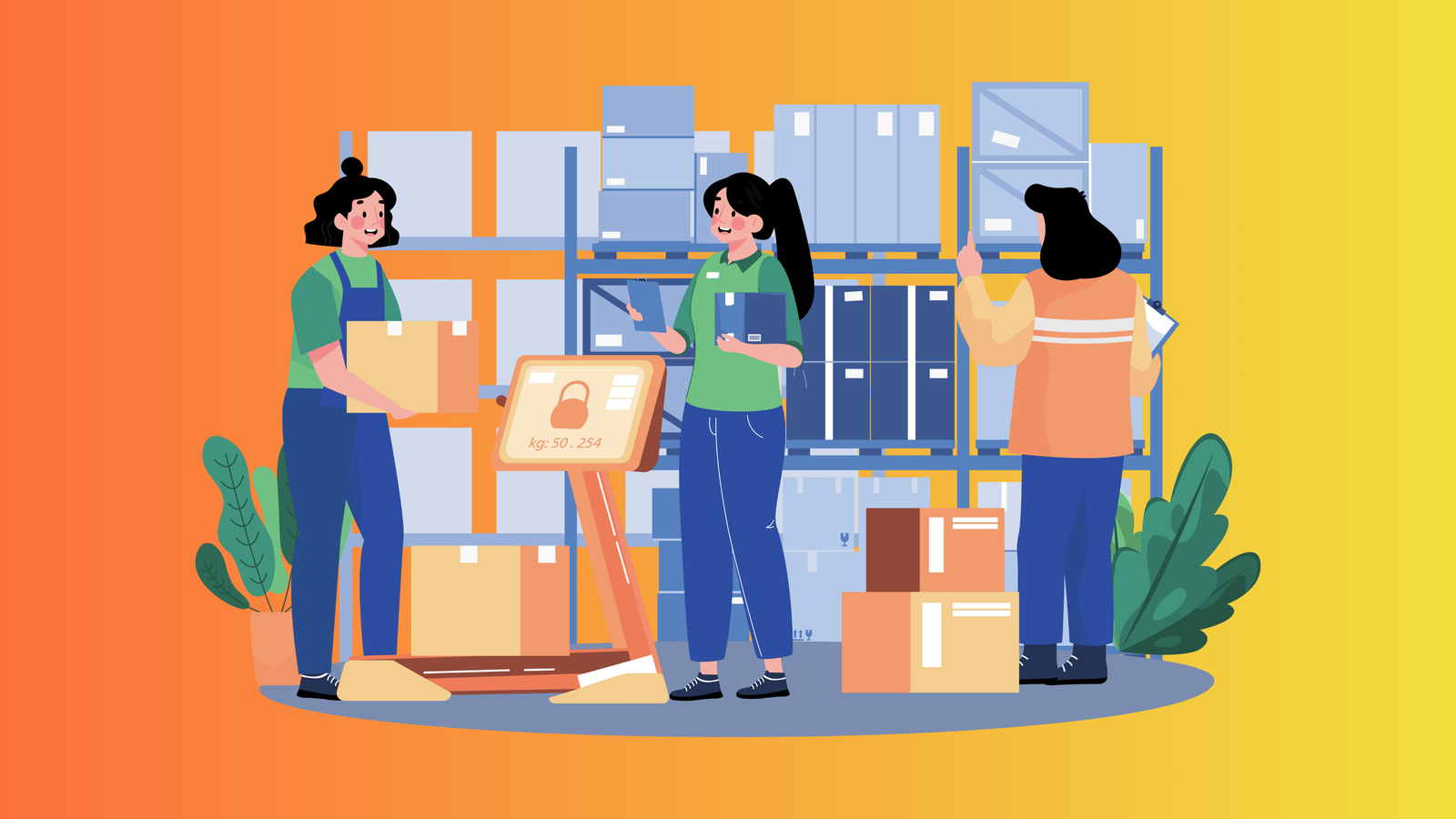
I remember standing in the back of our New Jersey fulfillment center in mid-January 2024, staring at a literal wall of pallets. We’d just survived a 5.3x return spike during the BFCM rush, and our floor space was physically running out. At the time, we were strictly Direct-to-Consumer (DTC), but we’d just signed our first major contract with a national big-box retailer. Suddenly, the "retail vs wholesale" debate wasn't just a theoretical boardroom discussion; it was a spatial crisis. We had thousands of individual returns flooding in from our website while simultaneously trying to palletize five thousand units for a regional distribution center. If you’ve ever felt like your warehouse was a pressure cooker, you’re not alone. Balancing wholesale vs retail is the ultimate test of an operator's grit because the two models demand entirely different logistical DNA.
What is Wholesale vs Retail: A Fundamental Operational Shift
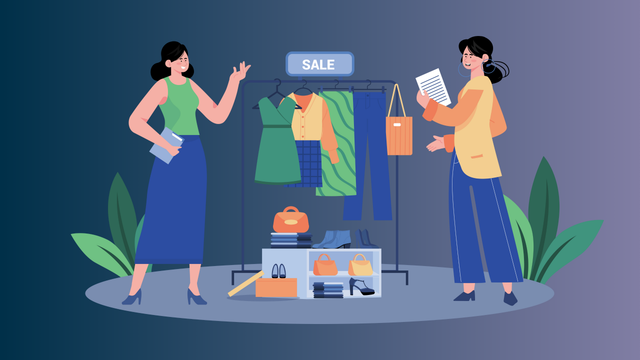
To truly understand what is wholesale vs retail, you have to look past the sales numbers and focus on the movement of goods. In the retail model, you are the merchant. You own the customer relationship, the data, and the high-margin "retail price." In the wholesale model, you are the supplier. You’re selling your brand’s products to a middleman—a wholesaler vs retailer—who then takes on the burden of reaching the end-user.
Now the logistics math that matters: in retail, you might spend $15 in marketing to acquire a $60 order. In wholesale, your "customer acquisition cost" is essentially the time spent in sales meetings, but you’re selling 1,000 units at a time. The trade-off is the wholesale vs retail price. You might only get $30 per unit from the wholesaler, but your "pick and pack" labor drops significantly because you’re shipping pallets instead of individual padded mailers.
Here’s where ops breaks: brands often try to use the same team and software to manage both. But what is retail vs wholesale if not two different sports? Retail requires high-speed parcel sorting and a "white-glove" unboxing experience. Wholesale requires rigorous adherence to "Routing Guides"—those 200-page manuals from retailers like Target or Nordstrom that dictate exactly how a pallet must be labeled. We once saw a brand hit with $12,000 in chargebacks in a single month simply because their warehouse team used the wrong size of shipping labels for a wholesale shipment. (Standardizing your labeling process is the most boring, yet most profitable, thing you can do).
Understanding the Wholesaler vs Retailer Relationship
The difference between wholesaler and retailer is often a matter of position in the supply chain. A wholesaler business definition usually involves an entity that buys in massive bulk from manufacturers to distribute to smaller retailers. However, in today’s DTC-first world, many brands act as their own wholesalers.
If you are a brand, you are the manufacturer. When you sell to a boutique, you are acting as the wholesaler. When you sell on your own Shopify store, you are the retailer. This hybrid existence is where most modern brands find themselves. It’s also where the confusion starts regarding wholesale what is and how to protect your brand equity. If you sell your product to a wholesaler for too low a price, they might undercut your own retail site, leading to "channel conflict."
I’m of the opinion that you should never enter a wholesale relationship without a strict Minimum Advertised Price (MAP) agreement. I’ve seen brands destroyed because they sold bulk inventory to a third-party seller on Amazon who then dropped the wholesale price vs retail spread so thin that the brand couldn't sell anything on their own website. It’s a race to the bottom that no one wins.
Cracking the Code: How to Price Wholesale vs Retail
One of the most frequent questions I get from founders is how to price wholesale vs retail. The standard industry benchmark is "Keystone Pricing," which means the retail price is double the wholesale price.
But how much is wholesale price vs retail in reality? It depends on your "Landed COGS" (Cost of Goods Sold). If it costs you $10 to make a product, your wholesale price should ideally be $20 to $25, and your retail price should be $50 to $60. This gives the retailer enough "meat on the bone" to run their own marketing and pay for their physical storefront.
Comparison: Logistics and Cost Structure
So, what is a wholesaler vs retailer cost-to-serve? In retail, you pay for the box, the tissue paper, the sticker, and the labor to make it look "Instagrammable." In wholesale, you pay for the pallet, the shrink wrap, and the freight carrier. And let’s not forget the "payment terms." In retail, you get paid instantly via Shopify Payments. In wholesale, you might be on "Net 60" terms, meaning you’re effectively acting as a bank for the retailer for two months. (I’m still uncertain why more brands don't negotiate for shorter terms, especially when they’re providing high-demand inventory).
Where Logistics Fails: The Hybrid Model Bottleneck
When you’re balancing retail vs wholesale, your inventory management system (IMS) becomes your most important tool. We’ve seen honest failure cases where a brand's IMS didn't "talk" to their wholesale portal. They accidentally sold 500 units to a boutique that had already been promised to their DTC customers during a flash sale. The result was a PR nightmare and 500 "Out of Stock" emails.
Now the logistics math that matters: if your warehouse is 90% full, your efficiency drops by 50% because your team is constantly moving boxes just to get to other boxes. This is exactly what happened during that 5.3x return spike I mentioned. We had wholesale pallets blocking the aisles where the returns were supposed to be processed.
Common question I see: Is wholesale better for scaling than retail?
Operators always ask me this when they hit a plateau. The answer is that wholesale provides "volume" while retail provides "data." If you want to build a household name, you usually need a wholesaler vs retailer presence in physical stores. But if you want to understand why people buy your product, you need the direct feedback loop of retail.
In my experience, brands that scale too fast into wholesale without a robust brand hub for logistics often "scale themselves into bankruptcy." They don't account for the fact that a big retailer can return unsold inventory (the "Buy-Back" clause). I remember a brand that had to take back $200,000 of inventory from a national chain. They didn't have the space to store it, and their warehouse was already in a backlog. It nearly "wiped out" their entire year's profit.
How to Handle Returns in a Wholesale vs Retail World
The "return journey" is where the difference between wholesaler and retailer is most painful. In retail, a return is a single box coming back from a customer. In wholesale, a return is often an entire pallet of damaged or unsold goods coming back from a distribution center.
If you are using enterprise tools like Loop or Happy Returns for your DTC side, you’re already ahead of the curve. But these tools aren't built for wholesale returns. For that, you need a different strategy. You need to know how to price wholesale vs retail to include a "damage allowance." Instead of taking the goods back, you give the retailer a 1% to 3% discount to handle the disposals themselves.
But if the goods must come back, don't let them drown your central DC.
Here's something every ops leader asks: Should I use a 3PL for both wholesale and retail?
Common question I see: "Can one 3PL really do both well?" The short answer is yes, but only if they have a dedicated wholesale team. ShipBob, for example, has built out significant B2B capabilities. But smaller 3PLs often struggle. They might be great at shipping 5,000 t-shirts individually, but they don't know how to book a freight carrier via a portal like Narvar or handle Optoro's liquidation workflows.
I’ve seen failure cases where a 3PL charged a brand "parcel rates" to pick and pack a wholesale order. They were literally charging $3.00 per item to pick 1,000 items, even though they were all the same SKU and were already on a pallet. (Always negotiate a "Wholesale Pick Fee" that is significantly lower than your "Retail Pick Fee").
Operators always ask me: "How much is wholesale price vs retail" supposed to be for international?
This is a tricky one. When you add in duties, taxes, and international freight, your wholesale vs retail price spread often gets squeezed. I’m of the opinion that you should almost always use an "Incoterms" agreement like EXW (Ex Works) or FCA (Free Carrier) for international wholesale. This means the buyer pays for the shipping and handles the customs. If you try to handle international retail shipping yourself, you’ll likely find that your "landed cost" is higher than your wholesale price. (Logistics is the one area where "guessing" is guaranteed to cost you five figures).
Conclusion: The Path Forward
Deciding between wholesale vs retail isn't an "either-or" choice anymore. It's about building a multi-channel logistics engine that can handle both with equal precision. The retail side gives you the margin and the customer loyalty; the wholesale side gives you the volume and the shelf presence. While the transition can be painful—as evidenced by our own warehouse bottlenecks and 5.3x return spikes—the rewards are significant. The key is to never let your "front-end" sales outpace your "back-end" operations. By protectively pricing your goods, you can scale without the typical "growing pains."