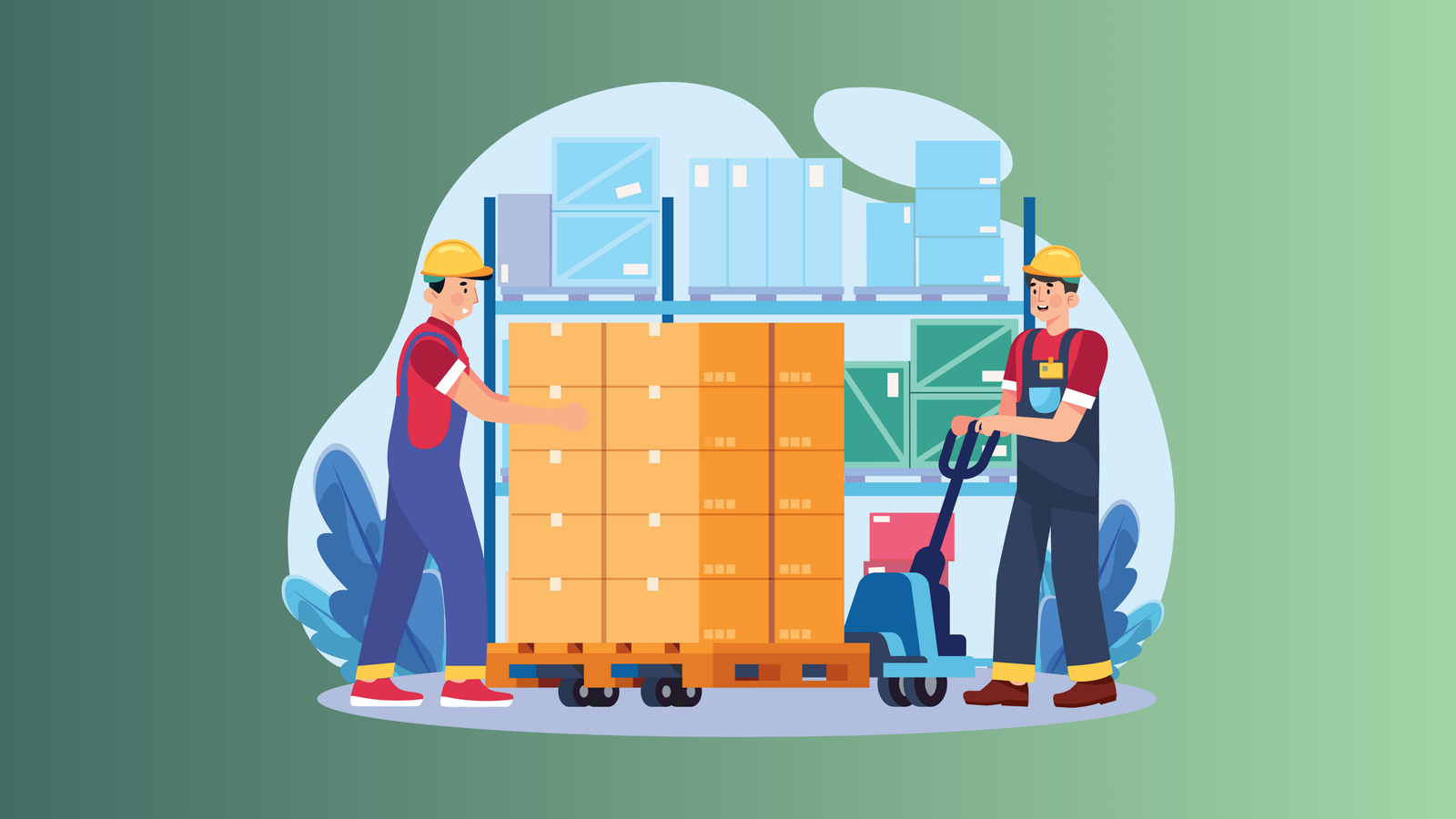
Did you know that Amazon processed over $100 billion in returns last year? That's a mind-boggling amount of inventory that essentially has to go somewhere, and most of it ends up in the liquidation market. I remember my first foray into this world back in May of 2024. I’d seen those viral videos of people unboxing pristine PlayStations and designer handbags, so I pulled the trigger on a $1,500 electronics pallet. When the freight truck finally dropped it off in my driveway, I was vibrating with excitement. But as I cut the shrink wrap, I realized I’d basically bought a very expensive pile of 50 broken humidifiers and three shattered air fryers. It was a brutal $1,200 loss that almost made me quit reselling for good. I’d fallen for the hype without understanding the technical reality of an amazon pallet sale.
Since then, I’ve spent the last two years testing every liquidation store and auction liquidation site out there to see what actually moves the needle. The 2026 landscape is vastly different from the "Wild West" days of a few years ago. Platforms have become more transparent, but scammers have also become much more sophisticated. If you're looking for amazon pallets for sale near me, you have to be armed with data, not just hope. I’ve realized that while traditional pallets can occasionally be a goldmine, they're often a massive gamble that small sellers can't afford to lose.
Is the amazon pallet sale legit or a total scam?
This is the number one question in my inbox. People always ask me, "is the amazon pallet sale legit?" especially after seeing those targeted ads on Facebook or TikTok promising a whole pallet of MacBook Pros for $99. Let me be 100% clear: those $99 "Warehouse Closing" ads are absolutely, unequivocally fake. If it sounds too good to be true in the liquidation world, it isn't just a bad deal—it’s a phishing scam designed to steal your credit card info.
But here's where it gets interesting: there is a legitimate amazon pallet sale economy. Real pallets aren't sold for $99 on a random website; they are sold through authorized pallet liquidations platforms like Liquidation.com, Bulq, or DirectLiquidation. On these sites, you aren't buying a mystery box for a hundred bucks. You’re bidding on a manifest (a detailed list of items) and paying anywhere from $400 to $5,000 plus heavy freight shipping.
Now the tricky part is the "Manifest Accuracy." Even on legitimate sites, the condition of the items is often "Uninspected Returns." This means Amazon employees basically tossed the item back in a box, and nobody has checked to see if it actually works. In January of 2025, I bought what I thought was a "New Condition" laptop pallet. One of the units looked perfect, but when I opened it, the motherboard had been swapped out for a literal brick. (The original buyer had scammed Amazon, and now I was the one holding the brick).
Finding amazon pallets for sale near me
If you're tired of paying $300 in shipping fees for a single pallet, you might be searching for amazon pallets for sale near me. Finding a local liquidation store or warehouse can save you a fortune on logistics, but it requires some detective work. Most of these warehouses aren't in fancy shopping malls; they’re tucked away in industrial parks.
I spent a weekend in October 2025 driving around the outskirts of Warminster and Quakertown looking for local pallet liquidations hubs. I eventually found a small warehouse that allowed "local pickup" for online auctions. This is a game-changer. When you can inspect the pallet (at least from the outside) before it’s loaded onto your truck, you reduce your risk significantly.
But wait, there’s a catch. Local liquidation sale events are often crowded with "professional" bidders who have been doing this for twenty years. They know exactly which pallets look like they’ve been "cherry-picked" (where the good stuff was taken out and replaced with junk). If you see a pallet where the shrink wrap looks loose or re-taped, stay away. In my experience, those are almost always the leftovers that nobody else wanted.
The reality of amazon return pallets for sale: Grading and Junk
When you look at amazon return pallets for sale, you’ll see different "grades." Understanding these is the difference between a 20% profit and a total loss.
-
Grade A (New/Shelf Pulls): These are items that never sold. The boxes might be dusty, but the product is fine. These have the highest margins but the highest bidding prices.
-
Grade B (Open Box): Usually items that were returned because the buyer "changed their mind." They usually work, but the packaging is trashed.
-
Grade C (Used/Salvage): This is the danger zone. Expect at least 50% of this to be broken or missing parts.
Now the tricky part is that many amazon pallet sales are "Mixed Lots." You might get five Grade A items and forty Grade C items. I remember an honest failure I had in July of 2025 where I bought a mixed toy pallet. I thought the "Estimated Retail Value" of $4,000 meant I’d make at least $1,000. But after sorting through the broken Lego sets and headless Barbies, I realized the "Retail Value" was based on original prices, not the "damaged" market price. I barely broke even after 30 hours of cleaning and testing.
Closo's "Node" program: A zero-upfront-cost alternative
This is where the industry is heading in 2026. If the risk of buying pallets of merchandise for sale is too high for your budget, you need to look at Closo's "Node" program (receiving brand returns directly). Instead of buying a pallet from a middleman who has already taken a cut, you're essentially becoming a localized "Node" for brands.
This is a more predictable, zero-upfront-cost alternative to the traditional amazon pallet sale. You aren't gambling $1,500 on a mystery pallet. Instead, you're receiving returns directly from brands, inspecting them, and listing them. It removes the "gambler's anxiety" that comes with traditional pallet liquidations. I started using this model in late 2025, and it completely changed my cash flow. I no longer had thousands of dollars tied up in "potential" profit sitting in my garage.
And since I’m using the Closo 100% Free Crosslister, I can take those returns and have them live on eBay, Poshmark, and Mercari in minutes. I use Closo to automate my inventory management—it saves me about 3 hours weekly—and it ensures that I don't double-sell an item that I only have one of.
Maximizing margins with AI Pricing and Crosslisting Agents
Once you have your pallets of merchandise for sale, the real work begins: pricing. Most resellers guess. They look at the last three solds on eBay and pick a number in the middle. But in 2026, the market moves too fast for that.
Closo’s AI Pricing and Crosslisting Agents help sellers maximize margins on those specific types of inventory by looking at real-time demand across all major platforms. If I have a specific coffee maker from an auction liquidation, the AI might tell me that while eBay is flooded with them, they are selling for a 15% premium on Poshmark because of a specific trend.
I remember a specific anecdote from March of 2025. I had a batch of 20 "distressed box" high-end blenders. My gut told me to list them for $150 each to move them fast. The Closo AI agent suggested $185 but with a specific "Free Shipping" threshold. I followed the AI's lead, and I ended up making an extra $700 on that batch alone. It’s those small margin wins that actually allow you to grow your business.
People always ask me: How do I handle the shipping of a pallet?
Common question I see: "Do I need a forklift to buy an amazon pallet sale?"
The short answer is no, but you do need a "Liftgate" service. When you order a pallet online, the truck that delivers it needs a way to get it from the truck bed to the ground. If you don't specify "Liftgate Delivery," the driver might just leave you standing there staring at a 500-lb pallet six feet in the air.
I made this mistake in early 2025. I bought a pallet of small appliances and forgot to check the "Residential Liftgate" box. The driver refused to unload it, and I had to spend two hours manually unloading the pallet box-by-box inside the truck while the driver glared at me. (It was physically exhausting and incredibly embarrassing). Most auction liquidation sites will charge an extra $50-$100 for this service, but trust me, it’s worth every penny.
Common question I see: Is the amazon pallet sale real on those "Liquidation Apps"?
Something everyone wants to know: "I see apps on the App Store promising cheap Amazon pallets. Are they legit?"
In my opinion, most of them are garbage. Stick to the established desktop-based marketplaces. Many of these apps are just "re-sellers of re-sellers." They buy the good pallets from Liquidation.com, take out the high-value items, and then "re-palletize" the junk to sell to beginners on an app.
And that's the tricky part of amazon pallet sales. There are layers to this game. You want to be as close to the source as possible. This is why I prefer the Closo Node model; it cuts out three or four layers of middlemen who are all trying to take a "skim" off your potential profit.
Comparison Table: Traditional Pallets vs. Closo Node Program
I admit, I still get a "rush" from opening a traditional pallet. There’s a certain gambler's high that comes with finding a $400 item buried under a pile of chargers. But after looking at my 2025 tax returns, the numbers don't lie. The "rush" wasn't paying the bills; the consistent, low-risk returns from the Node program were.
Step-by-Step: How to win your first legit amazon pallet sale
If you're dead-set on buying a physical pallet, follow this specific workflow to avoid getting burned:
-
Set a Strict Budget: Decide on your maximum bid including shipping. Shipping is usually the "hidden killer."
-
Analyze the Manifest: Don't buy "Unmanifested" lots. You want a line-by-line list of what’s inside.
-
Check the "Sold" Prices: Take the top five most valuable items on the manifest and look up their current sold price on eBay. If those five items don't cover at least 60% of your total cost, walk away.
-
Verify the Seller: Only buy from "Verified" sellers on platforms like Liquidation.com.
-
Prepare Your Workspace: You need a place to "Process" the pallet. You'll need bubble wrap, boxes, a testing station, and a way to dispose of the actual wooden pallet (which is harder than you think).
-
Use the Closo 100% Free Crosslister: Once you've tested the items, list them on at least three platforms immediately. Speed is your friend.
I personally use Closo to automate my inventory management—it saves me about 3 hours weekly—and it’s the only way I can keep up with the volume of a 200-item pallet without going crazy.
If you're looking for more advanced strategies, you should definitely check out our 2026 Reseller Sourcing Guide. I've also put together a guide on Mastering eBay SEO that is essential for moving liquidation inventory quickly.
Honest failures: The "Condition" trap
I want to be honest about a limitation of the liquidation store model. Even if the manifest says "Like New," you have to assume that at least 10% of the inventory is unusable.
In November 2025, I bought a pallet of "High-End Kitchenware." Everything looked great, but three of the expensive espresso machines were missing the internal water tanks. The exterior was "Like New," but the machines were useless. I couldn't return the pallet because the "Terms and Conditions" state that minor missing parts are part of the risk.
This is why I’m still a bit uncertain about recommending full-time pallet flipping to people who don't have a "repair" skillset. If you don't know how to fix a basic electrical connection or source spare parts on eBay, your "junk rate" will be much higher. It’s not just about selling; it’s about refurbishing.
Conclusion: Is the amazon pallet sale worth it for you?
At the end of the day, an amazon pallet sale is a business tool, not a get-rich-quick scheme. If you have the space, the technical skills, and the stomach for a bit of gambling, it can be a lucrative way to build a liquidation store from your garage.
However, if you're looking for a sustainable, low-stress business model, I strongly suggest looking into the Closo Node program. It offers the same access to high-quality pallets of merchandise for sale without the heart-stopping upfront investment. My business became much more profitable once I stopped trying to "win" the auction and started focusing on the data.
I use Closo to automate my inventory management—it saves me about 3 hours weekly and keeps my sanity intact during heavy sourcing months. Whether you choose the pallet or the Node, just remember: trust the manifest, calculate your shipping, and always test your inventory before you list it