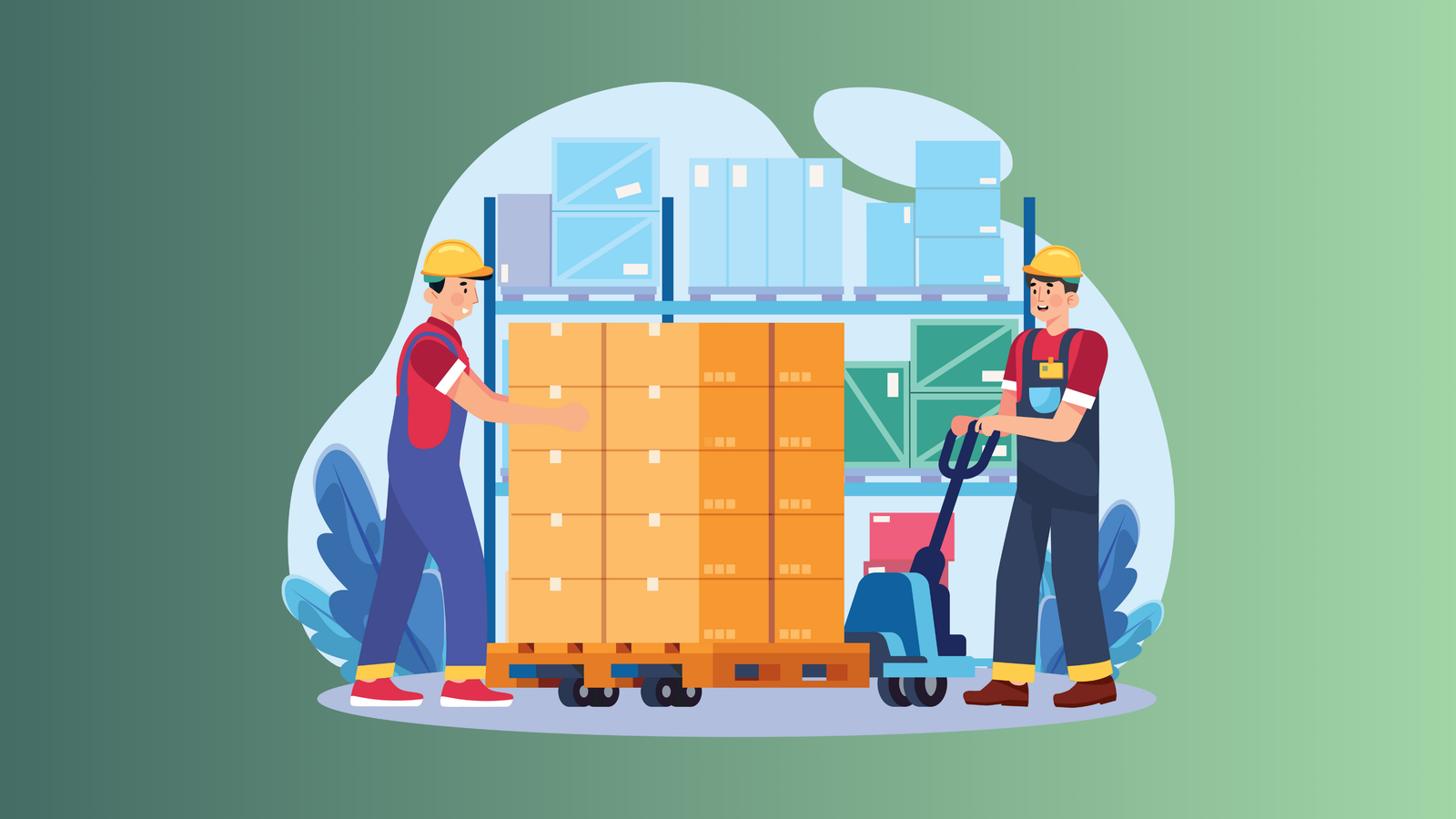
I’ll never forget the smell of my garage in the winter of 2019. It was a distinct mixture of dust, cardboard, and stale perfume. I had just backed my truck up to the door and unloaded a 7-foot-tall tower of shrink-wrapped mystery boxes. I had spent $650—money I absolutely did not have to lose—on a "High Count Electronics" pallet from a liquidation website I’d barely vetted.
My hands were shaking as I cut the plastic. The first box contained a shattered humidifier. My heart sank. The second box contained a brand new, sealed iPad Pro.
That roller coaster of emotion is the reality of the liquidation game. It is not free money. It is a logistical grind that requires a strong back and an even stronger stomach. Over the last few years, I’ve processed tons (literally) of Amazon returns, turning what Bezos considers "trash" into a six-figure revenue stream. But for every iPad, there are a hundred broken toasters and used hairbrushes.
If you are looking to enter this arena, you need to know exactly where to look and who to trust. The market is full of middlemen and scammers looking to offload their junk on beginners.
Where to Buy Amazon Return Pallets: The Hierarchy of Sources
When you type where to buy amazon return pallets into a search engine, you are bombarded with ads. Most of them are scams or "middlemen" who have already picked out the good stuff. To succeed, you need to buy as close to the source as possible. The supply chain works like a waterfall. The higher up you buy, the better the quality.
Tier 1: The Direct Source (B-Stock) Amazon doesn't sell pallets directly to you and me via a "Store." They use a B2B partner called B-Stock. This is where the big boys play.
-
The Pros: You are buying directly from Amazon warehouses. The manifests are usually accurate.
-
The Cons: You need a Resale Certificate (Business License). You often have to buy in "Truckload" quantities (24 pallets) to get the best price.
-
My Experience: I bought my first truckload here in 2021. It cost $8,000. It took up my entire driveway, living room, and kitchen. I made $4,000 profit, but it took me three months to sell it all.
Tier 2: The Aggregators (Liquidation.com / Bulq) If you can't buy a whole truck, you go here. These companies buy the truckloads, break them down, and sell individual pallets.
-
Liquidation.com: It is an auction site. You bid against others.
-
Bulq: They offer fixed prices. They are famous for their "manifests" (lists of exactly what is in the box).
-
Opinion Statement: I believe Bulq is the safest place for a beginner to start because you know exactly what you are getting. The profit margins are lower, but you won't lose your shirt on a box of rocks.
Tier 3: The Bin Stores and Local Liquidators These are guys who bought the truckload and are selling off the "reject" pallets they don't want to process. Be very careful here. If a pallet has been "cherry-picked" (meaning they opened it, took the iPads, and resealed it), it is worthless.
Where to Buy Pallets of Amazon Returns Near Me (The Freight Killer)
Here’s where it gets interesting... The product cost isn't what kills you. The shipping cost is. Shipping a 400lb pallet across the country costs $300–$500. If the pallet cost $500, you just doubled your cost basis. You now need to make $1,000 just to break even.
This is why I obsess over where to buy amazon return pallets near me. I search for "Liquidation Warehouses" or "Pallet Auctions" on Google Maps within a 50-mile radius.
-
The Strategy: I rent a U-Haul trailer for $20. I drive to the warehouse. I load it myself.
-
The Result: I save $400 on shipping. That $400 is pure profit.
Anecdote: I found a local auction house in New Jersey that handled returns for a major vacuum cleaner brand. Because it was local and "pick up only," the big national buyers ignored it. I was buying pallets of Dyson and Shark vacuums for $150. I bought a repair kit on eBay for $20. I fixed them up and sold them for $150 each. I was turning $170 into $1,500 every weekend until the auction house eventually went out of business.
The "Manifest" Myth vs. Reality
When you are looking for where to buy a amazon return pallet, you will see two terms: "Manifested" and "Unmanifested."
-
Manifested: You get a spreadsheet list of every UPC code in the pallet.
-
Unmanifested: It is a mystery box. "General Merchandise."
Honest Failure: In 2020, I got cocky. I bought an "Unmanifested General Merchandise" pallet for $550 from a site called Direct Liquidation. The photos showed what looked like coffee makers and tools on the outside. I got it home and cut the wrap. The "coffee makers" were just empty boxes used to build the wall structure. The inside of the pallet was filled with—I am not kidding—used adult diapers and broken ceramic plant pots. I paid to throw that pallet away.Lesson: If you cannot see a manifest, assume the value is $0. Only buy unmanifested if you are physically standing in front of it and can inspect it.
Analyzing Value: How Closo Helps Me Predict Demand & Trends 6 Weeks Ahead
Even if you have a manifest, you can lose money. Just because a pallet has $5,000 worth of "Retail Value" doesn't mean you can sell it for $5,000. Retail value is a lie. You need "Resale Market Value." Furthermore, you need to know if the items are trending down.
I use Closo to vet manifests before I bid.How Closo helps me predict demand & trends 6 weeks ahead is by analyzing the trajectory of the products on the list.
-
Scenario: I see a pallet full of "Massage Guns."
-
The Trap: Retail value says they are worth $100 each.
-
The Closo Data: Closo signals show that search volume for massage guns has dropped 40% in the last month and the market is flooded. The real street value is $15.
-
The Decision: I pass on the pallet. Another seller buys it, thinking they struck gold, and gets stuck with unsellable inventory.
I use Closo to automate my manifest analysis – saves me about 3 hours weekly of checking eBay sold listings manually.
Where to Buy Amazon Return Pallets: Avoiding Scams
The internet is flooded with fake liquidation websites. If you search amazon return pallets where to buy on Facebook,you will see ads for "$49 Pallets of iPhones." These are 100% scams. Amazon does not sell pallets of iPhones for $49.The scrap metal in an iPhone is worth more than that.
Red Flags to Watch For:
-
Payment via CashApp/Zelle/Crypto: Legitimate businesses accept credit cards. If they only take non-reversible payments, run.
-
"DM for Price": Real liquidators list their prices or run transparent auctions.
-
Stock Photos: If the photo looks like a perfect marketing image with Amazon logos photoshopped onto boxes, it’s fake. Real pallet photos look messy, dark, and industrial.
(I actually fell for a "Mystery Box" ad on Instagram once. It promised a pallet of returns for $99.Three weeks later, I received a tiny envelope containing a single, counterfeit pair of AirPods. I couldn't even charge back because the site had disappeared.)
Processing the Pallet: The "Sweat Equity"
Now the tricky part... Buying the pallet is the easy part. Processing it is where the money is earned. You have 400 items in your garage.
-
20% are trash.
-
30% are open-box but new.
-
50% are used/broken.
My Toolkit for Processing:
-
Goo Gone: To remove the shipping labels and "Thanks to you" tape Amazon puts on everything.
-
Scotty Peeler: A plastic blade that scrapes stickers off boxes without ripping the cardboard.
-
Thermal Printer (Rollo): You will be printing a lot of shipping labels. Inkjet printers are too slow and expensive.
-
Testing Station: I have a designated table with batteries, extension cords, and a magnifying glass.
You have to test everything. If you sell an item as "Open Box" and it doesn't work, the buyer will return it, and you lose the shipping cost twice.
Where to Buy Pallets of Amazon Returns: Category Strategy
Not all return pallets are created equal. They are sorted by category. You need to pick a lane based on your skills.
-
High Count (Small) Electronics:
-
Pros: High value density. Easy to ship.
-
Cons: High breakage rate. Requires technical skills to test/reset.
-
-
Bulky / Home Goods:
-
Pros: Furniture, baby gates, luggage. Lower competition because they are hard to ship.
-
Cons: You need a lot of space. You practically have to sell these locally.
-
-
Clothing (Soft Goods):
-
Pros: Huge volume. Can be cross-listed easily.
-
Cons: Returns due to sizing are a nightmare. You have to inspect for smells/stains.
-
Opinion Statement: I steer clear of clothing pallets unless they are "New with Tags." Processing used clothing returns takes too much time. You have to unfold, inspect, fold, and bag hundreds of items. I prefer hard goods where I can just wipe them down and plug them in.
Using Closo to Move the Inventory
Once you process the pallet, you have a pile of random stuff. A pallet might contain:
-
1 Snowboard
-
14 Phone Cases
-
1 Espresso Machine
-
3 Dog Beds
You cannot build a niche store with this. You have to be a generalist. This means you need to be on every platform. The snowboard goes on eBay or Facebook Marketplace. The phone cases go on Mercari. The espresso machine goes on Amazon (if you are ungated) or eBay.
I use the Closo 100% Free crosslister. It is impossible to manually type out listings for 100 random items on 3 different sites.
-
The Workflow: I take photos and list everything on eBay first.
-
The Automation: I use Closo to push those listings to Poshmark (for the clothes found in the pallet) and Mercari (for the lighter items).
-
The Result: I clear the pallet 2x faster. Speed is life. You need the space back for the next pallet.
Where to Buy Amazon Return Pallets: Liquidation Sales and Auctions
If you want to find liquidation sales or pallet auctions that aren't online, check the legal notices in your local paper or sites like AuctionZip. Sometimes, businesses go under and liquidate their Amazon return inventory. These are rare but profitable events.
The "Bin Store" Connection: Find a local "Amazon Bin Store" (those places that sell items for $5 on Fridays, $3 on Saturdays, etc.). Go there and ask to speak to the owner. Ask them: "Do you ever sell whole pallets before you sort them?" Many owners are tired and overstocked.Anecdote: I made friends with a Bin Store owner in 2023. He called me one Tuesday and said, "I have too many pallets coming in. I don't have room. Do you want 3 of them for $300 each?" I drove over and picked them up. They were raw, unpicked pallets. I made $2,000 on that load because I skipped the auction fees.
Where to Buy a Amazon Return Pallet: The Verdict on ROI
Is it worth it?Where to buy amazon return pallets is a question of risk tolerance. If you buy from Bulq, you might make a steady 20% margin. If you buy unmanifested truckloads from B-Stock, you might make 100% or lose 50%.
The Math of a Typical Pallet:
-
Cost: $600 (Pallet) + $200 (Shipping) = $800.
-
Item Count: 100 items.
-
Trash/Broken: 20 items ($0).
-
**Low Value ($10):** 40 items ($400).
-
**Mid Value ($30):** 30 items ($900).
-
**High Value ($100):** 10 items ($1,000).
-
Total Gross Sales: $2,300.
-
Fees/Shipping Out: ~$800.
-
Net Profit: $700.
It takes about 20 hours of work to process, list, and ship those 80 items. $700 / 20 hours = $35/hour. It is a job. It is not passive income.
Common Questions I See
People always ask me... Do I need a business license to buy pallets?
For the top-tier sites like B-Stock or Liquidation.com, yes, you usually need a Resale Certificate (which proves you are a business and allows you to buy tax-free). However, sites like Bulq or Quicklotz often sell to individuals without a license, though you will have to pay sales tax on the purchase.
Common question I see... Is it mostly broken stuff?
It depends on the condition code.
-
"New / Overstock": Brand new, never sold. Best quality.
-
"Customer Returns": The gamble. Some are unopened; some are destroyed.
-
"Salvage": Broken. Only buy this for parts. Always check the condition code on the manifest before you buy.
People always ask me... Can I return a pallet if it's bad?
No. All sales are final. This is the golden rule of liquidation. If you buy a pallet of TVs and they are all cracked screens,you own a pallet of cracked screens. This is why starting with small, inexpensive lots is crucial before dropping thousands on a truckload.
Conclusion
Finding where to buy amazon return pallets is the first step in a very messy, very profitable journey. It requires you to be a logistics manager, a repair technician, and a data analyst all at once. But there is no feeling quite like turning a box of "rejects" into a stack of cash.
My honest assessment is that the easy days of 2020 are over. You cannot just buy any pallet and profit. You must be selective. You must use tools to predict resale value. And you must be willing to get your hands dirty.
If you are ready to start analyzing manifests with data rather than hope, use the Closo Seller Hub to verify your potential inventory.
For more on where to find specific high-value items within these pallets, read our Most Expensive Thing on Amazon 2026
And if you end up with a lot of random clothing, check out Selling on Poshmark Guide to move it fast.