I remember standing on the concrete floor of our primary New Jersey facility in mid-January, staring at a literal mountain of cardboard that stretched toward the skylights. We’d just survived a staggering 5.3x return spike during the BFCM rush, and the "Returns Purgatory" was real. Every square foot was occupied by uninspected apparel, and our customer service tickets were up 400% with people asking, "Where is my refund?" It’s a moment every operator dreads. It’s also the moment you realize that your entire brand’s reputation doesn't rest with your marketing team or your fancy Shopify theme. It rests with the fulfillment center warehouse associate. These are the people who touch your product last before it reaches a customer and first when it comes back. If you aren't obsessing over their workflow, you aren't running a business; you’re managing an expensive accident.
Quick overview
The Ground Floor: What a Fulfillment Center Warehouse Associate Actually Does
If you’re looking at warehouse careers, you probably think the job is just putting things in boxes. That's a massive oversimplification. In the modern era of e-commerce, the role has evolved into something much more technical. Whether you’re looking at amazon fulfillment center warehouse associate jobs near me or working for a boutique 3PL like ShipBob, the day-to-day involves a high-speed dance with technology.
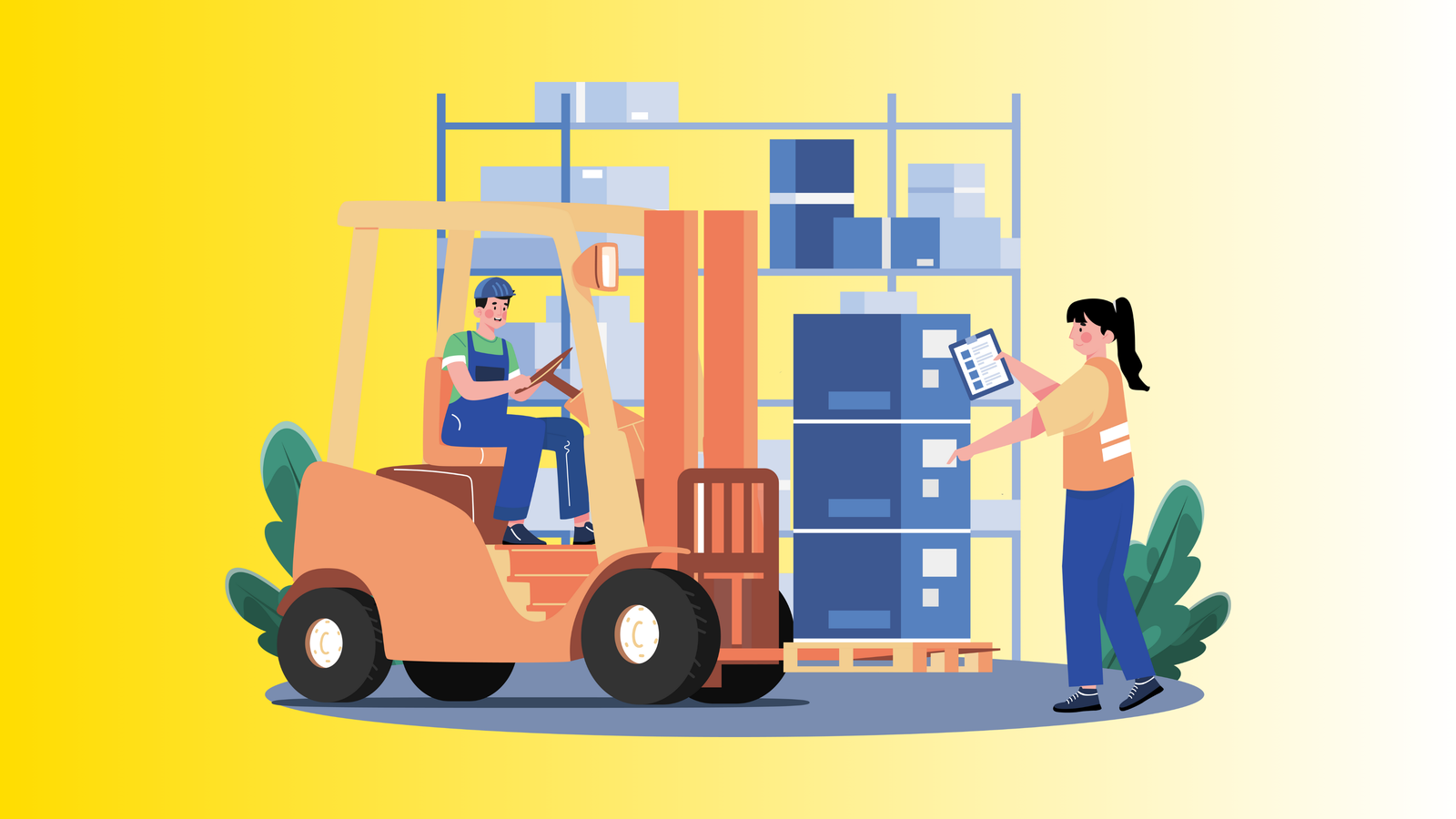
Associates are responsible for "stowing" (placing inventory in bins), "picking" (finding it when an order hits), and "packing." But the hardest part? The inbound. When returns flood the building, the associate has to play the role of a quality inspector. They have to decide if a pair of leggings has been worn, if a box is salvageable, or if the item is destined for a liquidation partner like Optoro.
Now the logistics math that matters: a single mistake at the packing station costs a brand roughly $35 in shipping, labor, and "make-good" discount codes. If an associate misses a quality issue on a return and that item gets restocked and sent to a new customer, your LTV (Lifetime Value) for that customer effectively hits zero. (And yes, I’ve spent sleepless nights over these error rates, realizing our "lean" staffing was actually a massive drain on our EBITDA).
Breaking Down the Amazon Fulfillment Center Warehouse Associate Job Description
We can't talk about this role without talking about the giant in the room. The amazon fulfillment center warehouse associate job description is often the benchmark for the industry. Amazon has turned warehousing into a high-tech science. If you go to amazon jobs.com, you’ll see that they emphasize "safety, pace, and accuracy."
An amazon fulfillment center warehouse associate isn't just a manual laborer; they are an operator of advanced robotics and RF scanners. They work in massive facilities where the walk-time between bins is managed by algorithms. (Parenthetically, I’ve often wondered if the gamification of these roles actually helps with morale or just adds to the stress—I’m still uncertain on that one).
But here’s where the "Amazon standard" can be a double-edged sword for DTC brands. Amazon is built for outbound speed. When it comes to the complex, "messy" work of boutique returns—where an associate has to check for a specific scent on a garment or a tiny scratch on a high-end watch—the standard fulfillment center warehouse associate amazonworkflow often moves too fast to catch the nuances. This is why many brands are moving their returns away from the big-box centers and looking for a more specialized fulfillment center warehouse associate who is trained specifically in asset recovery.
The Search for Talent: Fulfillment Center Warehouse Associate Jobs Near Me
If you’re a brand owner, you’re constantly looking for warehouses jobs hiring near me to keep your facility staffed during peak. If you’re a worker, you’re likely searching for warehouse jobs hiring that offer a living wage and decent benefits. The competition for a reliable hiring warehouse worker is at an all-time high in 2026.
And let’s be honest: the traditional warehouse model is exhausting. I recall an honest failure case with a wellness brand that tried to "power through" a seasonal surge with a skeleton crew. They were hiring anyone they could find. Because the training was rushed, the associates were over-processing returns—sending perfectly good $80 jars of cream to the trash because they didn't know how to clean the outer lid. They lost $12,000 in sellable inventory in ten days.
So, how do you find the right people? You look for those who want a career, not just a shift. Warehouse careers are increasingly about data management and equipment operation. The best associates are the ones who can tell you why the workflow is breaking before the bottleneck happens. They are your eyes and ears on the floor.
Where the System Breaks: The High Cost of Centralization
Here is the logistics math that matters for every DTC founder. Traditionally, every return—regardless of where it came from—is shipped back to your central warehouse. You pay for the label via Loop or Happy Returns, and then you pay a fulfillment center warehouse associate to open that box.
I saw an apparel brand in 2024 that was paying $27 in total return processing costs for an item with a $19 resale value. They were paying for cross-country freight, 3PL "receiving fees," and the hourly wage of the associate. It was a losing game. They were quite literally paying to lose money.
But wait, it gets worse. When you ship everything to one central location, you create a "backlog trap." If your New Jersey hub is snowed in or understaffed, your entire national return flow stops. This is why the industry is moving toward decentralized hubs. Instead of one massive team, you have specialized nodes where a fulfillment center warehouse associate can process items locally.
How to Join Closo to Manage Flow of Returned Orders
This is the shift we are seeing in 2026. People are looking for a Closo sellers job or a way to work within a decentralized network. How to join closo to manage flow of returned orders is a question we hear from both small business owners and veteran warehouse managers.
We route eligible returns locally instead of sending everything back to the warehouse — cutting return cost from ~$35 to ~$5 and speeding refunds. This isn't just about software; it’s about the physical people. By using return hubs, we empower the local fulfillment center warehouse associate to be an expert in their regional inventory.
Instead of an associate in a 1-million-square-foot Amazon building who has never seen your brand's specific packaging, you have a local hub worker who knows exactly what a "mint condition" return looks like for your specific catalog. This specialization reduces the "Over-processing" failure case I mentioned earlier. (I’m of the opinion that the future of logistics isn't bigger warehouses, but smarter, more local ones).
The Refund Delay Impact: Why Speed is Your Best Marketing
Operators always ask me, "Why does it matter if the return takes two weeks to process?" Here’s the reality: in 2026, the customer expects an instant refund. If your fulfillment center warehouse associate is buried under a backlog, your refund doesn't trigger.
I recall an anecdote where a footwear brand saw a 40% spike in customer service tickets because of a 14-day refund delay. Those tickets weren't free. Each one cost about $8 in agent time via Narvar. When they finally did the math, the "slow" returns process was costing them more than the actual shipping.
When you use local routing, the fulfillment center warehouse associate at the hub inspects the item within 48 hours of the customer dropping it off at a UPS/FedEx drop-off. The refund is triggered immediately. The customer is happy, the support team is quiet, and the inventory is ready to be sold to someone else in that same zip code. You can find more about this unified approach in our brand hub.
Common question I see: Is working as an Amazon fulfillment center warehouse associate worth it?
Operators always ask me about the labor market. They want to know if they should be competing with Amazon's wages. Working as an amazon fulfillment center warehouse associate amazon is a specific kind of grind. It offers great pay and benefits, but the "productivity quotas" are legendary.
If you are a smaller brand, you can't always compete on the absolute dollar amount. But you can compete on the "Job Quality." A fulfillment center warehouse associate at a smaller, more specialized hub often has more autonomy and less "robotic" pressure.
But let's be real—Amazon has set the floor. If you aren't paying at least what the local amazon jobs.com listing says, you’re going to be constantly hiring warehouse worker after warehouse worker because your turnover will be 100%. (Honestly, I think the labor shortage in logistics is the single biggest threat to DTC growth over the next five years).
Operators always ask me: How do I keep warehouse workers from burning out during peak?
Common question I see: "Our team is exhausted by December 15th. What are we doing wrong?" The answer is usually "Inbound Friction." Most brands focus all their automation on the outbound (ShipBob, etc.). They leave the inbound (returns) to be a manual, messy, frustrating process for the associate.
Imagine being a fulfillment center warehouse associate and having to manually look up every return in a spreadsheet because the systems don't sync. It's soul-crushing work. By using tools like Loop and Optoro, and by decentralizing the flow so the piles never get too high, you make the job manageable.
And don't ignore the physical environment. I recall a failure case where a warehouse in the Midwest didn't have proper heating in the "Returns Bay." The associates were freezing, so they naturally moved slower. The backlog grew. The refunds were delayed. The brand lost $20,000 in LTV that month. All because of a $500 space heater.
The Logistics of the Future: Automation vs. Human Insight
There is a lot of talk about "fully automated warehouses" where there is no fulfillment center warehouse associate. I’m skeptical. While robots are great at moving a standard box from point A to point B, they are terrible at "Grading."
A robot can't tell if a dress smells like perfume or if a box has been opened carefully enough to be reused. That requires human judgment. The most successful brands in 2026 are the ones that use technology to empower the associate, not replace them.
So, when you are looking through warehouse careers or posting a warehouse jobs hiring ad, focus on the "Decision Making" aspect of the role. You want people who can think, not just people who can lift. (And yes, you should probably pay them more for that).
Conclusion: Putting People Back in the Supply Chain
At the end of the day, your fulfillment center warehouse associate is the person who keeps your brand's promises. They are the ones who make sure the "Gift for Mom" arrives on time and that the "Return for the Wrong Size" is handled with respect. In an era of high-speed automation and cold algorithms, the human touch in the warehouse is actually your greatest competitive advantage. While the big-box model of amazon fulfillment center warehouse associate roles works for commodity items, the future of DTC belongs to the specialized, decentralized hub.
We route eligible returns locally instead of sending everything back to the warehouse — cutting return cost from ~$35 to ~$5 and speeding refunds. This allows us to focus on quality over quantity and ensures that your inventory—and your reputation—is always in good hands.
Would you like me to run a "Labor and Logistics Audit" on your current returns process to see how much "Invisible Labor" is eating your profit?
FAQ
What is the starting pay for a fulfillment center warehouse associate? In 2026, the average starting pay for a fulfillment center warehouse associate ranges from $19 to $24 per hour, depending on the location and the level of technical skill required. Roles that involve operating heavy machinery or advanced inventory software typically command a premium.
How do I find warehouse jobs hiring near me? The most effective way is to use specific keywords on job boards like "fulfillment center warehouse associate jobs near me" or visit dedicated career portals like amazon jobs.com. Additionally, checking with local 3PLs or decentralized networks like Closo can uncover specialized roles.